

Blog
Church Security Guide: Less Lethal Protection for California Places of Worship

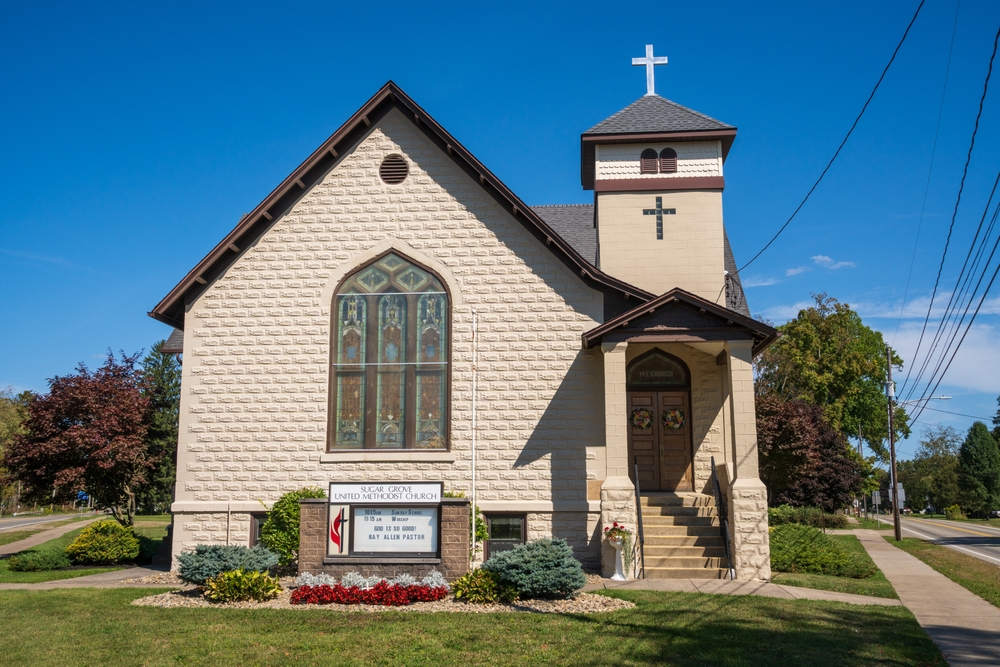
Every Sunday morning, millions of Californians walk through the doors of churches, temples, mosques, and synagogues expecting a place of peace. But the unfortunate reality is that church security is no longer something congregations can afford to leave to faith alone. Incidents at houses of worship have risen sharply over the past decade — from verbal disruptions and thefts to targeted acts of violence that make national headlines.
This guide is the comprehensive resource your congregation needs. Whether you’re a pastor, board member, volunteer security coordinator, or concerned congregant, you’ll learn how to build a complete church security plan that protects your people without compromising the mission of welcome and peace that defines your community. We’ll cover team building, use of force policies, equipment selection, training, and the layered approach that keeps everyone safer — starting today.
[IMAGE: Exterior of a welcoming California church with a visible but unobtrusive greeter at the entrance — alt text: church security team greeting congregants at California place of worship]
Why Church Security Can No Longer Be Optional
The data is sobering. According to the Faith Based Security Network, violent incidents at houses of worship in the United States have increased every year since 2014. Between active threats, domestic disputes that spill into Sunday services, and property crimes, no denomination or faith tradition is immune.
The numbers tell the story:
- Over 1,600 documented deadly force incidents at U.S. faith-based organizations since 1999
- California consistently ranks among the top states for worship center incidents due to population density and open-access culture
- Property crimes — theft, vandalism, arson — affect an estimated 1 in 5 congregations annually
- The majority of violent incidents involve a person known to the congregation, not a stranger
The “It Won’t Happen Here” Mindset
This is the single most dangerous attitude in place of worship security. Small congregations assume they’re too small to be targets. Large ones assume size provides safety in numbers. Rural churches think crime is a city problem.
None of these assumptions hold up. Incidents are reported at churches with 30 members and churches with 3,000. They happen in Fresno, Sacramento, San Diego, and the Central Valley. The question isn’t if your congregation will face a security situation — it’s when, and whether you’ll be prepared.
Recent High-Profile Events
From the 2017 Sutherland Springs shooting to disruptions at California houses of worship that never make national news, the pattern is clear: places of worship are soft targets. Open doors, predictable schedules, and minimal security make them vulnerable. California’s own history includes incidents at Sikh temples, Jewish synagogues, and Christian churches — no faith is exempt.
The good news? Congregations that invest in a church security plan dramatically reduce both the likelihood and the severity of incidents.
See how six industries — including houses of worship — are adopting less lethal security
The Unique Challenge of Church Security
Securing a house of worship isn’t like securing a bank, a school, or a retail store. Churches face a set of contradictions that make traditional security approaches a poor fit.
Open Doors vs. Screening
Your church exists to welcome people. Turning the lobby into a TSA checkpoint defeats the purpose. Yet completely uncontrolled access creates vulnerability. The goal is welcoming vigilance — a posture that says “you are welcome here” while maintaining awareness.
Diverse Populations
A typical Sunday includes infants in the nursery, children in Sunday school, teenagers, adults, and elderly members with mobility limitations. Your security approach must account for the most vulnerable — not just the most capable.
Budget Constraints
Professional armed security costs $50-100+ per hour — a budget-breaker for most congregations. Volunteer-based approaches require a different kind of investment: training, equipment, and policy.
The Values Conflict
Here’s the real tension: many congregations feel that armed security conflicts with their mission of peace. Firearms in the sanctuary make people uncomfortable. Parents worry. Visitors feel unwelcome. Some denominations have explicit theological positions against lethal weapons in worship spaces.
This is exactly why less lethal solutions have become the fastest-growing approach to house of worship protection. They address the security gap without forcing congregations to choose between safety and values.
[IMAGE: A diverse congregation gathered in a California church sanctuary — alt text: California place of worship congregation needing church security plan]
Why Less Lethal Is the Natural Fit for Houses of Worship
Less lethal protection solves the core tension that makes church security so difficult. Here’s why it’s the approach that aligns with what your congregation actually believes.
Proportional force matches your values. Most church security situations involve a disruptive individual, a domestic situation, or a mentally distressed person — not an armed attacker. A less lethal response like a Byrna SD launcher delivers proportional force that stops a threat without taking a life. That matters when your mission statement talks about loving your neighbor.
No lethal escalation. When a firearm is present, every encounter carries the risk of death — for the threat, for bystanders, for the security team member. Less lethal tools like Byrna launchers remove that risk. A pepper ball round incapacitates temporarily. A kinetic round delivers stopping force. Neither is designed to kill.
Reduced liability. We’ll cover this in detail below, but the liability difference between a less lethal discharge and a firearm discharge inside a crowded sanctuary is enormous. Your church’s insurance carrier will agree.
Congregation comfort. Most congregants who would be uncomfortable seeing a Glock on a security volunteer’s hip are perfectly fine with a Byrna launcher — especially when they understand what it does. Transparency about your security approach builds trust rather than fear.
The bridge between unarmed and armed. Byrna launchers fill the gap that many church safety teams face: they need more than verbal de-escalation, but firearms feel like too much. Less lethal is the middle ground that actually works.
Learn how Byrna compares to traditional firearms for self-defense
Explore the Byrna SD Kinetic Kit — the most popular choice for church security teams
Building Your Church Security Team
A church security plan is only as strong as the people behind it. Here’s how to build a team that’s effective, reliable, and aligned with your congregation’s culture.
Who to Recruit
Look within your congregation first. You likely already have members with relevant backgrounds:
- Military veterans — trained in situational awareness and threat assessment
- Current or retired law enforcement — understand use of force, legal frameworks, and communication under stress
- Security professionals — private security, corporate security, or event security experience
- Medical professionals — nurses, EMTs, and paramedics for your response team
- Calm, observant personalities — not every team member needs a tactical background. Some of your best assets are people who notice when something feels “off”
Avoid recruiting based solely on enthusiasm. Maturity, judgment, and de-escalation instincts matter more than tactical ability.
Define Clear Roles
A well-structured church safety team uses a layered approach with defined positions:
- Greeter/Observer — Positioned at entry points. Welcomes everyone while watching for warning signs. First point of contact and first line of awareness.
- Interior Monitor — Moves through the sanctuary and common areas during services. Watches for disruptions, medical emergencies, or unauthorized access to restricted areas (nursery, offices).
- Exterior Watch — Monitors the parking lot, perimeter, and building exterior. Communicates with interior team via radio.
- Command/Coordinator — Central point of communication. Makes decisions about escalation. Contacts law enforcement when needed.
Minimum Team Size
For a congregation under 200, you need a minimum of 4 people per service — one in each role above. Larger congregations should scale proportionally. And remember: you need enough volunteers to rotate, so recruit at least twice your per-service requirement to avoid burnout.
Creating a Use of Force Policy
This is the single most important document your church security california program will produce. Without a written use of force policy, your team is operating on individual judgment — and that’s a liability nightmare.
Why You Need One in Writing
A use of force policy does three things:
- Guides your team — everyone knows exactly what level of response is appropriate for each situation
- Protects your church legally — documented policies demonstrate reasonable preparation
- Reassures your congregation — transparency about your security approach builds trust
The Force Continuum for Houses of Worship
Your policy should follow a clearly defined escalation framework:
- Presence and observation — simply being visible and aware deters most problems
- Verbal de-escalation — calm, direct communication to resolve situations before they escalate
- Verbal commands — clear, authoritative direction when de-escalation isn’t working
- Physical intervention — escorting someone out, blocking access, guiding to an exit
- Less lethal force — deployment of Byrna launchers (pepper or kinetic rounds) when physical safety is at immediate risk
- Lethal force — only as an absolute last resort when lives are in imminent danger (many church security plans do not include this level at all)
Most church security situations resolve at levels 1-3. Your team should spend 80% of their training time on awareness, communication, and de-escalation — and the remaining 20% on equipment deployment.
Documentation Requirements
Every incident — even minor ones — should be documented within 24 hours. Your policy should include:
- Incident report templates
- Chain of custody for any evidence
- Post-incident review process
- Clear reporting structure (who reviews incidents, who communicates with leadership)
[IMAGE: Security team members reviewing a use of force policy document — alt text: church safety team reviewing use of force policy for place of worship security]
Equipping Your Team with Byrna Launchers
Once your team is built and your policy is written, it’s time to talk equipment. Here’s what we recommend for church security teams.
Which Model?
For house of worship protection, we recommend two options:
- Byrna SD Kinetic Kit — The most popular choice for church safety teams. Compact, reliable, and easy to conceal under a sport coat or jacket. Perfect for interior monitors and greeters.
- Byrna LE Launcher — Enhanced features for team members with more experience. Ideal for your command/coordinator role or exterior watch where concealment is less critical.
Concealed vs. Visible Carry
We generally recommend concealed carry for church security teams — it doesn’t alarm visitors or children, preserves the worship atmosphere, and avoids “security theater.” Some congregations prefer a visible deterrent for exterior positions, which is fine — just address it in your use of force policy.
Ammo Selection
For indoor church environments, Byrna pepper rounds are the primary recommendation:
- Chemical irritant incapacitates without permanent injury
- Effective in enclosed spaces with lower ricochet risk than kinetic rounds
- Creates a temporary barrier effect that can slow multiple threats
Kinetic rounds are a strong secondary option for exterior positions or outdoor events.
Holster and Carry Options
Each team member should have a consistent, practiced draw. Inside-waistband holsters work well for concealed carry under jackets, while belt holsters suit exterior watch positions. Consistent placement across the team builds muscle memory during training.
Contact us about group pricing on Byrna launchers for your church security team
Training Your Security Team
Equipment without training is worse than useless — it creates a false sense of security. This is where most church security plans fail. They buy equipment and skip the investment that actually matters.
Why Off-the-Shelf Isn’t Enough
Watching YouTube videos and reading the Byrna manual doesn’t prepare your team for a live situation in a crowded sanctuary with children present. Church security training needs to be:
- Scenario-based — practiced in environments that simulate your actual worship space
- Stress-tested — conducted under pressure so team members know how they’ll respond
- Role-specific — your greeter needs different skills than your interior monitor
- Ongoing — not a one-time event but a quarterly commitment
Less Lethal California’s Group Training Programs
This is exactly what we built our training program to address. Less Lethal California offers group training specifically designed for church safety teams and institutional security:
- Fundamentals course — launcher operation, safety protocols, legal framework
- Scenario training — active threat response, de-escalation under pressure, team coordination
- Live fire practice — at our Manteca training facility, your team gets hands-on trigger time with Byrna launchers in a controlled environment
- Group rates — we offer discounted pricing for church security teams of 4 or more
You can also book time at our shooting range for independent practice between formal training sessions.
Quarterly Refreshers
Skills decay. A team that trained once six months ago is not a trained team. Plan for monthly 15-minute briefings, quarterly full training sessions with scenario exercises and live fire, and an annual comprehensive review of your entire security plan.
Book your team’s training at our Manteca facility
Beyond Launchers: A Layered Security Approach
Byrna launchers are a critical tool, but they’re one layer in a comprehensive church security plan. Here’s what else your security infrastructure should include.
Communication Systems
- Two-way radios with earpieces for every team member on duty
- A designated channel and code words for different threat levels
- A group text or app-based alert system for rapid team activation
Camera and Monitoring Systems
- Exterior cameras covering all entrances, the parking lot, and blind spots
- Interior cameras in hallways, nursery areas, and offices (not the sanctuary, typically)
- A monitoring station that at least one team member can observe during services
Lockdown Procedures
- Designated safe rooms with reinforced doors for children’s areas
- A clear lockdown signal that all staff and volunteers recognize
- Practiced lockdown drills at least twice per year (similar to fire drills)
Medical Preparedness
- At least two first aid kits accessible during every service
- An AED (automated external defibrillator) in a visible, accessible location
- At least one team member with current first aid/CPR certification
Parking Lot Security
- Well-lit parking areas
- Exterior watch position during arrival and dismissal
- A plan for suspicious vehicles or individuals observed before services
Law Enforcement Coordination
- Introduce your security team to local police and sheriff’s deputies
- Invite local law enforcement to review your security plan
- Establish a direct contact for non-emergency concerns and emergency dispatch protocols
[IMAGE: Layered security diagram showing cameras, communication, medical, and less lethal tools — alt text: layered church security plan diagram for California houses of worship]
Insurance and Liability Considerations
This is the section that gets your church board’s attention — because it directly affects the budget.
Insurance Carriers Are Paying Attention
A growing number of church insurance carriers now require a documented security plan as a condition of coverage. Others offer significant premium reductions for congregations with:
- A written use of force policy
- Trained security volunteers
- Less lethal equipment (specifically preferred over firearms by many carriers)
- Documentation of regular training
If your church doesn’t have a security plan, you may already be at risk of a coverage gap.
The Less Lethal Liability Advantage
The liability exposure difference between a Byrna launcher discharge and a firearm discharge inside a church is massive:
- Firearm discharge in a crowded sanctuary — risk of death, through-and-through injuries to bystanders, wrongful death lawsuits, criminal prosecution even if justified
- Byrna launcher discharge — temporary incapacitation, minimal risk of serious injury, dramatically lower lawsuit exposure, clear documentation of proportional force
Less lethal responses are easier to defend legally and far less traumatic for the congregation.
Documentation Protects Your Church
Every element of your security program should be documented:
- Use of force policy (signed by all team members)
- Training records (dates, attendees, topics covered)
- Incident reports
- Equipment maintenance logs
- Annual security plan reviews
This paper trail isn’t bureaucracy — it’s your legal shield.
See how multiple industries benefit from less lethal security solutions
Getting Started: Your First 30 Days
You don’t need to build a perfect security program overnight. Here’s a realistic 30-day action plan to go from zero to functional.
Week 1: Assess Vulnerabilities
- Walk your entire property with fresh eyes — entrances, exits, blind spots, isolated areas
- Identify where children are located relative to main entrances
- Note lighting issues, broken locks, and unsecured access points
- Document everything with photos and notes
Week 2: Recruit Your Team
- Approach 8-10 potential team members privately and individually
- Look for the backgrounds mentioned above (veterans, LEO, security, medical)
- Host an initial meeting to gauge interest and set expectations
- Aim to confirm at least 6-8 committed volunteers
Week 3: Develop Your Use of Force Policy
- Use the force continuum framework outlined above
- Adapt it to your congregation’s values and denominational guidance
- Have it reviewed by your church’s legal counsel
- Present it to your church board for approval
Week 4: Begin Training
- Contact Less Lethal California about group training for your team
- Schedule your first formal training session
- Begin equipment procurement — start with Byrna SD Kinetic Kits for your initial team
- Set a date for your first “live” security deployment during a service
By Day 30, you’ll have: a recruited team, an approved policy, a training date on the calendar, and equipment on order. That’s not perfection — it’s a foundation you can build on every month after.
Frequently Asked Questions
How do we start a church security team?
Start by identifying 2-3 committed leaders within your congregation who have relevant backgrounds — military, law enforcement, security, or emergency services. Have them conduct a basic vulnerability assessment of your property. Then expand recruiting to build a team of 6-8 volunteers. Develop a use of force policy, get board approval, and invest in training before you invest in equipment. Less Lethal California can guide you through every step of this process with our group consultation and training programs.
Are Byrna launchers appropriate for church security?
Absolutely. Byrna launchers are one of the most appropriate security tools for houses of worship because they provide effective stopping power without the lethal risk of firearms. They’re easier to train on, more comfortable for congregations to accept, and significantly reduce liability exposure. Many California churches are adopting the Byrna SD or Byrna LE as their primary security tool. Pepper rounds are particularly well-suited for indoor worship environments.
Does Less Lethal California offer group training for churches?
Yes. Group training for church safety teams and institutional security is one of our core programs. We offer fundamentals courses, scenario-based training, and live-fire practice at our Manteca training facility. We provide group rates for teams of 4 or more and can customize training to address your specific facility layout and security concerns. Contact us to discuss your team’s needs and schedule a session.
What does a church security plan include?
A comprehensive church security plan includes: a written use of force policy with a clearly defined force continuum, defined team roles and responsibilities, communication protocols, lockdown procedures, medical response capabilities, documentation and incident reporting systems, equipment selection and maintenance schedules, training requirements and schedules, coordination with local law enforcement, and regular plan review and updates. It’s a living document that evolves as your congregation and facility change over time.
Protect Your Congregation — Start Today
Your church shouldn’t have to choose between being welcoming and being safe. With the right team, the right training, and the right tools, you can build a church security program that protects every person who walks through your doors — without compromising the values that brought them there.
Less Lethal California is here to help your congregation take that first step. We offer:
- Group training programs designed specifically for church safety teams
- Byrna launchers with group pricing for security teams
- Live-fire range time at our Manteca facility for ongoing practice
- Expert consultation on building your complete security plan
Don’t wait for an incident to prove you needed a plan. Your congregation is counting on you to be ready.
[IMAGE: Church security team training with Byrna launchers at a range — alt text: church safety team training with Byrna less lethal launchers in California]