

Business Security
6 Reasons Your Church Needs a Security Plan in 2025

If your church doesn’t have a church security plan yet, you’re not alone — but you are vulnerable. Across California and the nation, incidents targeting houses of worship are climbing year over year. And yet, most congregations still operate without any formal security strategy.
This isn’t about turning your sanctuary into a fortress. It’s about responsible stewardship — protecting the people who trust you every time they walk through those doors. Whether your congregation is 50 members or 5,000, the time to act is now.
Here are six compelling reasons every church, synagogue, mosque, and house of worship needs to take security seriously this year — and how to get started without compromising your mission of peace.
1. Incidents at Houses of Worship Are Rising Annually
The numbers paint a sobering picture. According to FBI hate crime statistics, attacks targeting religious institutions have increased steadily over the past decade. The Department of Homeland Security has identified houses of worship as “soft targets” — locations with open access, predictable schedules, and limited security infrastructure.
California is not immune. The state has seen its share of incidents at places of worship, from vandalism and threats to active violence. Key data points include:
- FBI reports consistently show religious bias as one of the top motivations for hate crimes nationwide.
- DHS assessments recommend that all houses of worship conduct security audits and develop response plans.
- California DOJ data reflects a year-over-year increase in reported hate incidents at religious institutions statewide.
A church security plan isn’t a reaction to fear — it’s a response to reality. The threat landscape has changed, and place of worship security must change with it.
Want to understand the full scope of church security? Read our comprehensive Church Security Guide
2. “It Can’t Happen Here” Is the Most Dangerous Belief
Every congregation that has experienced a security incident believed the same thing: it can’t happen here. Small town, big city, rural or suburban — no community is exempt.
Complacency is the single biggest vulnerability a church faces. It’s not a locked door or a missing camera — it’s the assumption that danger will never arrive. That assumption leads to:
- No emergency action plan for active threats, medical events, or natural disasters.
- No communication protocol between ushers, staff, and first responders.
- No trained personnel who know how to de-escalate, evacuate, or respond.
You don’t need to live in fear to take church safety seriously. You simply need to acknowledge that preparation and prevention are acts of love — not paranoia. The congregations that recover fastest from incidents are the ones that had a plan before the crisis arrived.
3. Your Congregation Expects It
Here’s a reality many church leaders overlook: your members already want security. Multiple surveys from organizations like the National Association of Church Business Administration show that a growing majority of congregants — especially families with children — expect their house of worship to have visible safety measures.
Consider what’s at stake:
- Families with young children evaluate church safety the same way they evaluate school safety. If they don’t feel protected, they don’t come back.
- Elderly members are especially vulnerable and value the peace of mind that comes with knowing someone is watching out for them.
- Visitors and newcomers form first impressions quickly. A welcoming environment includes a safe environment.
Church safety is part of pastoral care. When you invest in a church security team, you’re telling your congregation: we value your life as much as your soul. That message builds trust, deepens community, and ultimately grows attendance.
[IMAGE: Diverse congregation inside a church with families and children — alt text: church safety matters to families and congregations in California]
Ready to talk about protecting your congregation? Contact Less Lethal California to discuss church security training and group rates
4. Insurance Carriers Increasingly Require It
This reason surprises many church leaders, but it’s becoming one of the most practical motivators: your insurance carrier may require a documented security plan.
The liability landscape for houses of worship has shifted dramatically. Carriers are increasingly asking pointed questions during renewals:
- Do you have a written emergency response plan?
- Is your security team trained and documented?
- Have you conducted a facility vulnerability assessment?
- What use-of-force policies are in place?
If you can’t answer “yes” to these questions, you may face higher premiums — or even denial of coverage. Beyond insurance, church leadership has a fiduciary responsibility to protect the organization’s assets, which includes the safety of its people.
A formal church security plan isn’t just smart — it may be financially necessary. It demonstrates due diligence, reduces liability exposure, and shows that your organization takes house of worship protection seriously at every level.
5. Less Lethal Options Fit the Mission of Peace
For many faith communities, the idea of armed security creates an immediate tension. Lethal weapons in a sanctuary feel contradictory to the message of peace, grace, and welcome. That’s a valid concern — and it’s exactly where less lethal solutions bridge the gap.
Byrna launchers give church security teams a powerful, effective option that aligns with non-violence values:
- Kinetic projectiles stop threats with impact force — no bullets, no lethal risk to bystanders in a crowded sanctuary.
- Chemical irritant rounds can incapacitate an aggressor from up to 60 feet away, giving your team time to evacuate and call law enforcement.
- De-escalation remains the first priority. Less lethal tools are a last resort, not a first response.
The Byrna SD Kinetic Kit is one of the most popular choices for church security teams because it’s intuitive, requires no firearms license in California, and delivers proportional response that protects without destroying.
Churches across multiple industries and institutions are making this shift. Explore how six different industries are adopting less lethal security solutions — including houses of worship.
6 Industries Using Less Lethal Security
6. Training Your Church Security Team Is Easier Than You Think
The biggest barrier to starting a church security plan isn’t budget, equipment, or even buy-in from leadership. It’s the assumption that it’s complicated. It’s not.
At Less Lethal California’s training facility in Manteca, we offer group training programs specifically designed for organizations like churches, schools, and businesses. Here’s what makes it accessible:
- Half-day and full-day options — fit training into your team’s schedule without disrupting ministry.
- No firearms experience required — Byrna launchers are designed for everyday people, and our instructors start from the basics.
- Scenario-based training — practice realistic situations tailored to the worship environment, including de-escalation, evacuation, and proportional response.
- Group rates available — bring your entire security team for training at a fraction of individual cost.
Your team walks out confident, certified, and ready to serve. That’s it. No military background needed. No months-long academy. Just practical, hands-on preparation from California’s first Byrna-dedicated training facility.
Book a group training session for your church security team → Less Lethal Training Course
Free Resource: Getting Started with Your Church Security Plan
If this list has convinced you it’s time to act, here’s the good news: getting started is simpler than you think. You don’t need to overhaul everything overnight. Follow these four steps to begin building a culture of safety at your church:
- Form a small security committee. Identify 3-5 trusted members — ushers, deacons, veterans, or anyone with a calm disposition and willingness to serve. This is your core church security team.
- Conduct a vulnerability walk-through. Walk your property with fresh eyes. Note unlocked doors, blind spots, lack of emergency exits signage, and areas where someone could enter undetected. Document everything.
- Contact Less Lethal California for a consultation. We’ll help you understand your options, answer your questions about California law, and recommend a training plan tailored to your congregation’s size and needs. Reach out here.
- Begin training. Start with your core team and expand from there. Even a single half-day session transforms your team’s awareness and confidence.
You don’t have to do it all at once. But you do have to start. For a deep dive into building a complete security program — including use-of-force policies, team structure, equipment, and ongoing drills — read our full Church Security Guide for California Congregations.
[IMAGE: Small group in a training session with Byrna launchers — alt text: church security team training at Less Lethal California in Manteca CA]
Frequently Asked Questions
How do we start a church security team?
Start by identifying a small group of 3-5 committed, level-headed volunteers from your congregation. These don’t need to be former law enforcement or military — they need to be reliable, trainable, and calm under pressure. Assign a team lead, conduct a facility vulnerability assessment, and then invest in professional training. Less Lethal California’s group training programs are designed specifically for teams like yours, with no prior experience required.
Are Byrna launchers appropriate for church security?
Absolutely. Byrna launchers are one of the best-fit tools for place of worship security because they provide effective stopping power without lethal force. They fire kinetic and chemical irritant projectiles that incapacitate a threat while minimizing risk to bystanders — a critical consideration in a crowded sanctuary. They require no firearms license in California, and they align with the non-violence mission most congregations hold. Learn more about the Byrna SD Kinetic Kit.
Does Less Lethal California offer group training for churches?
Yes. We offer half-day and full-day group training sessions at our Manteca, CA facility — California’s first dedicated Byrna training center. Church security teams receive hands-on instruction covering de-escalation, situational awareness, proper Byrna deployment, and scenario-based drills tailored to the worship environment. Group rates are available. Contact us to schedule your team’s session.
Protect Your Congregation — Take the First Step Today
A church security plan isn’t about fear. It’s about faithfulness — to your members, to their families, and to the responsibility you carry as a leader. The threats are real, the solutions are accessible, and the time to start is now.
Less Lethal California is here to help your congregation take that first step. From consultation to training to equipping your team with the right tools, we walk alongside you through the entire process.
Protect your congregation today. Contact us about church security training and group rates → or explore our Church Security Guide for the complete roadmap.

Church Security Guide: Less Lethal Protection for California Places of Worship
Every Sunday morning, millions of Californians walk through the doors of churches, temples, mosques, and synagogues expecting a place of peace. But the unfortunate reality is that church security is no longer something congregations can afford to leave to faith alone. Incidents at houses of worship have risen sharply over the past decade — from verbal disruptions and thefts to targeted acts of violence that make national headlines.
This guide is the comprehensive resource your congregation needs. Whether you’re a pastor, board member, volunteer security coordinator, or concerned congregant, you’ll learn how to build a complete church security plan that protects your people without compromising the mission of welcome and peace that defines your community. We’ll cover team building, use of force policies, equipment selection, training, and the layered approach that keeps everyone safer — starting today.
[IMAGE: Exterior of a welcoming California church with a visible but unobtrusive greeter at the entrance — alt text: church security team greeting congregants at California place of worship]
Why Church Security Can No Longer Be Optional
The data is sobering. According to the Faith Based Security Network, violent incidents at houses of worship in the United States have increased every year since 2014. Between active threats, domestic disputes that spill into Sunday services, and property crimes, no denomination or faith tradition is immune.
The numbers tell the story:
- Over 1,600 documented deadly force incidents at U.S. faith-based organizations since 1999
- California consistently ranks among the top states for worship center incidents due to population density and open-access culture
- Property crimes — theft, vandalism, arson — affect an estimated 1 in 5 congregations annually
- The majority of violent incidents involve a person known to the congregation, not a stranger
The “It Won’t Happen Here” Mindset
This is the single most dangerous attitude in place of worship security. Small congregations assume they’re too small to be targets. Large ones assume size provides safety in numbers. Rural churches think crime is a city problem.
None of these assumptions hold up. Incidents are reported at churches with 30 members and churches with 3,000. They happen in Fresno, Sacramento, San Diego, and the Central Valley. The question isn’t if your congregation will face a security situation — it’s when, and whether you’ll be prepared.
Recent High-Profile Events
From the 2017 Sutherland Springs shooting to disruptions at California houses of worship that never make national news, the pattern is clear: places of worship are soft targets. Open doors, predictable schedules, and minimal security make them vulnerable. California’s own history includes incidents at Sikh temples, Jewish synagogues, and Christian churches — no faith is exempt.
The good news? Congregations that invest in a church security plan dramatically reduce both the likelihood and the severity of incidents.
See how six industries — including houses of worship — are adopting less lethal security
The Unique Challenge of Church Security
Securing a house of worship isn’t like securing a bank, a school, or a retail store. Churches face a set of contradictions that make traditional security approaches a poor fit.
Open Doors vs. Screening
Your church exists to welcome people. Turning the lobby into a TSA checkpoint defeats the purpose. Yet completely uncontrolled access creates vulnerability. The goal is welcoming vigilance — a posture that says “you are welcome here” while maintaining awareness.
Diverse Populations
A typical Sunday includes infants in the nursery, children in Sunday school, teenagers, adults, and elderly members with mobility limitations. Your security approach must account for the most vulnerable — not just the most capable.
Budget Constraints
Professional armed security costs $50-100+ per hour — a budget-breaker for most congregations. Volunteer-based approaches require a different kind of investment: training, equipment, and policy.
The Values Conflict
Here’s the real tension: many congregations feel that armed security conflicts with their mission of peace. Firearms in the sanctuary make people uncomfortable. Parents worry. Visitors feel unwelcome. Some denominations have explicit theological positions against lethal weapons in worship spaces.
This is exactly why less lethal solutions have become the fastest-growing approach to house of worship protection. They address the security gap without forcing congregations to choose between safety and values.
[IMAGE: A diverse congregation gathered in a California church sanctuary — alt text: California place of worship congregation needing church security plan]
Why Less Lethal Is the Natural Fit for Houses of Worship
Less lethal protection solves the core tension that makes church security so difficult. Here’s why it’s the approach that aligns with what your congregation actually believes.
Proportional force matches your values. Most church security situations involve a disruptive individual, a domestic situation, or a mentally distressed person — not an armed attacker. A less lethal response like a Byrna SD launcher delivers proportional force that stops a threat without taking a life. That matters when your mission statement talks about loving your neighbor.
No lethal escalation. When a firearm is present, every encounter carries the risk of death — for the threat, for bystanders, for the security team member. Less lethal tools like Byrna launchers remove that risk. A pepper ball round incapacitates temporarily. A kinetic round delivers stopping force. Neither is designed to kill.
Reduced liability. We’ll cover this in detail below, but the liability difference between a less lethal discharge and a firearm discharge inside a crowded sanctuary is enormous. Your church’s insurance carrier will agree.
Congregation comfort. Most congregants who would be uncomfortable seeing a Glock on a security volunteer’s hip are perfectly fine with a Byrna launcher — especially when they understand what it does. Transparency about your security approach builds trust rather than fear.
The bridge between unarmed and armed. Byrna launchers fill the gap that many church safety teams face: they need more than verbal de-escalation, but firearms feel like too much. Less lethal is the middle ground that actually works.
Learn how Byrna compares to traditional firearms for self-defense
Explore the Byrna SD Kinetic Kit — the most popular choice for church security teams
Building Your Church Security Team
A church security plan is only as strong as the people behind it. Here’s how to build a team that’s effective, reliable, and aligned with your congregation’s culture.
Who to Recruit
Look within your congregation first. You likely already have members with relevant backgrounds:
- Military veterans — trained in situational awareness and threat assessment
- Current or retired law enforcement — understand use of force, legal frameworks, and communication under stress
- Security professionals — private security, corporate security, or event security experience
- Medical professionals — nurses, EMTs, and paramedics for your response team
- Calm, observant personalities — not every team member needs a tactical background. Some of your best assets are people who notice when something feels “off”
Avoid recruiting based solely on enthusiasm. Maturity, judgment, and de-escalation instincts matter more than tactical ability.
Define Clear Roles
A well-structured church safety team uses a layered approach with defined positions:
- Greeter/Observer — Positioned at entry points. Welcomes everyone while watching for warning signs. First point of contact and first line of awareness.
- Interior Monitor — Moves through the sanctuary and common areas during services. Watches for disruptions, medical emergencies, or unauthorized access to restricted areas (nursery, offices).
- Exterior Watch — Monitors the parking lot, perimeter, and building exterior. Communicates with interior team via radio.
- Command/Coordinator — Central point of communication. Makes decisions about escalation. Contacts law enforcement when needed.
Minimum Team Size
For a congregation under 200, you need a minimum of 4 people per service — one in each role above. Larger congregations should scale proportionally. And remember: you need enough volunteers to rotate, so recruit at least twice your per-service requirement to avoid burnout.
Creating a Use of Force Policy
This is the single most important document your church security california program will produce. Without a written use of force policy, your team is operating on individual judgment — and that’s a liability nightmare.
Why You Need One in Writing
A use of force policy does three things:
- Guides your team — everyone knows exactly what level of response is appropriate for each situation
- Protects your church legally — documented policies demonstrate reasonable preparation
- Reassures your congregation — transparency about your security approach builds trust
The Force Continuum for Houses of Worship
Your policy should follow a clearly defined escalation framework:
- Presence and observation — simply being visible and aware deters most problems
- Verbal de-escalation — calm, direct communication to resolve situations before they escalate
- Verbal commands — clear, authoritative direction when de-escalation isn’t working
- Physical intervention — escorting someone out, blocking access, guiding to an exit
- Less lethal force — deployment of Byrna launchers (pepper or kinetic rounds) when physical safety is at immediate risk
- Lethal force — only as an absolute last resort when lives are in imminent danger (many church security plans do not include this level at all)
Most church security situations resolve at levels 1-3. Your team should spend 80% of their training time on awareness, communication, and de-escalation — and the remaining 20% on equipment deployment.
Documentation Requirements
Every incident — even minor ones — should be documented within 24 hours. Your policy should include:
- Incident report templates
- Chain of custody for any evidence
- Post-incident review process
- Clear reporting structure (who reviews incidents, who communicates with leadership)
[IMAGE: Security team members reviewing a use of force policy document — alt text: church safety team reviewing use of force policy for place of worship security]
Equipping Your Team with Byrna Launchers
Once your team is built and your policy is written, it’s time to talk equipment. Here’s what we recommend for church security teams.
Which Model?
For house of worship protection, we recommend two options:
- Byrna SD Kinetic Kit — The most popular choice for church safety teams. Compact, reliable, and easy to conceal under a sport coat or jacket. Perfect for interior monitors and greeters.
- Byrna LE Launcher — Enhanced features for team members with more experience. Ideal for your command/coordinator role or exterior watch where concealment is less critical.
Concealed vs. Visible Carry
We generally recommend concealed carry for church security teams — it doesn’t alarm visitors or children, preserves the worship atmosphere, and avoids “security theater.” Some congregations prefer a visible deterrent for exterior positions, which is fine — just address it in your use of force policy.
Ammo Selection
For indoor church environments, Byrna pepper rounds are the primary recommendation:
- Chemical irritant incapacitates without permanent injury
- Effective in enclosed spaces with lower ricochet risk than kinetic rounds
- Creates a temporary barrier effect that can slow multiple threats
Kinetic rounds are a strong secondary option for exterior positions or outdoor events.
Holster and Carry Options
Each team member should have a consistent, practiced draw. Inside-waistband holsters work well for concealed carry under jackets, while belt holsters suit exterior watch positions. Consistent placement across the team builds muscle memory during training.
Contact us about group pricing on Byrna launchers for your church security team
Training Your Security Team
Equipment without training is worse than useless — it creates a false sense of security. This is where most church security plans fail. They buy equipment and skip the investment that actually matters.
Why Off-the-Shelf Isn’t Enough
Watching YouTube videos and reading the Byrna manual doesn’t prepare your team for a live situation in a crowded sanctuary with children present. Church security training needs to be:
- Scenario-based — practiced in environments that simulate your actual worship space
- Stress-tested — conducted under pressure so team members know how they’ll respond
- Role-specific — your greeter needs different skills than your interior monitor
- Ongoing — not a one-time event but a quarterly commitment
Less Lethal California’s Group Training Programs
This is exactly what we built our training program to address. Less Lethal California offers group training specifically designed for church safety teams and institutional security:
- Fundamentals course — launcher operation, safety protocols, legal framework
- Scenario training — active threat response, de-escalation under pressure, team coordination
- Live fire practice — at our Manteca training facility, your team gets hands-on trigger time with Byrna launchers in a controlled environment
- Group rates — we offer discounted pricing for church security teams of 4 or more
You can also book time at our shooting range for independent practice between formal training sessions.
Quarterly Refreshers
Skills decay. A team that trained once six months ago is not a trained team. Plan for monthly 15-minute briefings, quarterly full training sessions with scenario exercises and live fire, and an annual comprehensive review of your entire security plan.
Book your team’s training at our Manteca facility
Beyond Launchers: A Layered Security Approach
Byrna launchers are a critical tool, but they’re one layer in a comprehensive church security plan. Here’s what else your security infrastructure should include.
Communication Systems
- Two-way radios with earpieces for every team member on duty
- A designated channel and code words for different threat levels
- A group text or app-based alert system for rapid team activation
Camera and Monitoring Systems
- Exterior cameras covering all entrances, the parking lot, and blind spots
- Interior cameras in hallways, nursery areas, and offices (not the sanctuary, typically)
- A monitoring station that at least one team member can observe during services
Lockdown Procedures
- Designated safe rooms with reinforced doors for children’s areas
- A clear lockdown signal that all staff and volunteers recognize
- Practiced lockdown drills at least twice per year (similar to fire drills)
Medical Preparedness
- At least two first aid kits accessible during every service
- An AED (automated external defibrillator) in a visible, accessible location
- At least one team member with current first aid/CPR certification
Parking Lot Security
- Well-lit parking areas
- Exterior watch position during arrival and dismissal
- A plan for suspicious vehicles or individuals observed before services
Law Enforcement Coordination
- Introduce your security team to local police and sheriff’s deputies
- Invite local law enforcement to review your security plan
- Establish a direct contact for non-emergency concerns and emergency dispatch protocols
[IMAGE: Layered security diagram showing cameras, communication, medical, and less lethal tools — alt text: layered church security plan diagram for California houses of worship]
Insurance and Liability Considerations
This is the section that gets your church board’s attention — because it directly affects the budget.
Insurance Carriers Are Paying Attention
A growing number of church insurance carriers now require a documented security plan as a condition of coverage. Others offer significant premium reductions for congregations with:
- A written use of force policy
- Trained security volunteers
- Less lethal equipment (specifically preferred over firearms by many carriers)
- Documentation of regular training
If your church doesn’t have a security plan, you may already be at risk of a coverage gap.
The Less Lethal Liability Advantage
The liability exposure difference between a Byrna launcher discharge and a firearm discharge inside a church is massive:
- Firearm discharge in a crowded sanctuary — risk of death, through-and-through injuries to bystanders, wrongful death lawsuits, criminal prosecution even if justified
- Byrna launcher discharge — temporary incapacitation, minimal risk of serious injury, dramatically lower lawsuit exposure, clear documentation of proportional force
Less lethal responses are easier to defend legally and far less traumatic for the congregation.
Documentation Protects Your Church
Every element of your security program should be documented:
- Use of force policy (signed by all team members)
- Training records (dates, attendees, topics covered)
- Incident reports
- Equipment maintenance logs
- Annual security plan reviews
This paper trail isn’t bureaucracy — it’s your legal shield.
See how multiple industries benefit from less lethal security solutions
Getting Started: Your First 30 Days
You don’t need to build a perfect security program overnight. Here’s a realistic 30-day action plan to go from zero to functional.
Week 1: Assess Vulnerabilities
- Walk your entire property with fresh eyes — entrances, exits, blind spots, isolated areas
- Identify where children are located relative to main entrances
- Note lighting issues, broken locks, and unsecured access points
- Document everything with photos and notes
Week 2: Recruit Your Team
- Approach 8-10 potential team members privately and individually
- Look for the backgrounds mentioned above (veterans, LEO, security, medical)
- Host an initial meeting to gauge interest and set expectations
- Aim to confirm at least 6-8 committed volunteers
Week 3: Develop Your Use of Force Policy
- Use the force continuum framework outlined above
- Adapt it to your congregation’s values and denominational guidance
- Have it reviewed by your church’s legal counsel
- Present it to your church board for approval
Week 4: Begin Training
- Contact Less Lethal California about group training for your team
- Schedule your first formal training session
- Begin equipment procurement — start with Byrna SD Kinetic Kits for your initial team
- Set a date for your first “live” security deployment during a service
By Day 30, you’ll have: a recruited team, an approved policy, a training date on the calendar, and equipment on order. That’s not perfection — it’s a foundation you can build on every month after.
Frequently Asked Questions
How do we start a church security team?
Start by identifying 2-3 committed leaders within your congregation who have relevant backgrounds — military, law enforcement, security, or emergency services. Have them conduct a basic vulnerability assessment of your property. Then expand recruiting to build a team of 6-8 volunteers. Develop a use of force policy, get board approval, and invest in training before you invest in equipment. Less Lethal California can guide you through every step of this process with our group consultation and training programs.
Are Byrna launchers appropriate for church security?
Absolutely. Byrna launchers are one of the most appropriate security tools for houses of worship because they provide effective stopping power without the lethal risk of firearms. They’re easier to train on, more comfortable for congregations to accept, and significantly reduce liability exposure. Many California churches are adopting the Byrna SD or Byrna LE as their primary security tool. Pepper rounds are particularly well-suited for indoor worship environments.
Does Less Lethal California offer group training for churches?
Yes. Group training for church safety teams and institutional security is one of our core programs. We offer fundamentals courses, scenario-based training, and live-fire practice at our Manteca training facility. We provide group rates for teams of 4 or more and can customize training to address your specific facility layout and security concerns. Contact us to discuss your team’s needs and schedule a session.
What does a church security plan include?
A comprehensive church security plan includes: a written use of force policy with a clearly defined force continuum, defined team roles and responsibilities, communication protocols, lockdown procedures, medical response capabilities, documentation and incident reporting systems, equipment selection and maintenance schedules, training requirements and schedules, coordination with local law enforcement, and regular plan review and updates. It’s a living document that evolves as your congregation and facility change over time.
Protect Your Congregation — Start Today
Your church shouldn’t have to choose between being welcoming and being safe. With the right team, the right training, and the right tools, you can build a church security program that protects every person who walks through your doors — without compromising the values that brought them there.
Less Lethal California is here to help your congregation take that first step. We offer:
- Group training programs designed specifically for church safety teams
- Byrna launchers with group pricing for security teams
- Live-fire range time at our Manteca facility for ongoing practice
- Expert consultation on building your complete security plan
Don’t wait for an incident to prove you needed a plan. Your congregation is counting on you to be ready.
[IMAGE: Church security team training with Byrna launchers at a range — alt text: church safety team training with Byrna less lethal launchers in California]

6 Industries That Need Less Lethal Security Solutions in 2025
From organized retail crime sweeping through California storefronts to rising safety concerns on college campuses and inside houses of worship, one trend is unmistakable: less lethal security is no longer a niche concept—it’s becoming the preferred protection strategy across entire industries.
The reasons are clear. Businesses and institutions need effective threat response without the legal, ethical, and insurance liabilities that come with traditional firearms. Employees deserve real protection—but not every organization can or should arm its staff with deadly weapons. That’s where modern less lethal solutions like the Byrna SD Kinetic Kit step in, offering powerful deterrence and stopping capability without lethal force.
In this guide, we’ll break down the six industries leading the shift to less lethal security in 2025—and show you how to get your organization prepared.
[IMAGE: Collage of diverse professionals—security guard, real estate agent, campus officer, healthcare worker—representing industries adopting less lethal security — alt text: “Six industries adopting less lethal security solutions in California in 2025”]
1. Houses of Worship — Protection Without Militarizing the Sanctuary
Violent incidents at churches, synagogues, mosques, and temples have increased sharply in recent years. California congregations face a painful dilemma: how do you protect your community without turning a sacred space into a fortress?
Traditional firearms on church security teams create tension. Congregants may feel uneasy. Insurance premiums spike. And in crowded, enclosed spaces, the risk of collateral harm from a firearm is dangerously high.
Less lethal security solves this problem. Byrna launchers give volunteer safety teams and hired security a proportional, effective response option that aligns with the mission of peace at the heart of every house of worship.
Key advantages for church security include:
- Non-lethal stopping power — Byrna kinetic rounds deliver painful, incapacitating impact without penetrating skin
- Chemical deterrents — Byrna pepper and tear gas rounds create distance and confusion, buying time for evacuation
- Discreet carry — Launchers are compact enough for concealed carry by trained volunteers
- Lower liability — Reduced legal exposure compared to firearms in a public gathering space
Many California congregations are already developing formal use-of-force policies that integrate less lethal tools. If your house of worship hasn’t started, now is the time.
👉 Read our in-depth guide: Why Do Places of Worship Need a Use of Force Policy?
Protect your congregation with professional less lethal training
2. Retail & Cannabis Dispensaries — Fighting Back Against Organized Crime
California is ground zero for the organized retail crime epidemic. Smash-and-grab crews target everything from luxury stores to pharmacies, often in brazen, broad-daylight raids. For cannabis dispensaries—which deal in high-value product and significant cash—the threat is even more severe.
Traditional retail crime prevention strategies like cameras and alarm systems are reactive. They document the crime; they don’t stop it. Armed guards with firearms escalate the danger for employees and bystanders in tight retail environments.
Less lethal security fills the critical gap:
- Visible deterrent — Byrna-equipped staff signal that the store is protected, discouraging opportunistic theft
- Active response — Kinetic and chemical rounds can halt an attacker or intruder without deadly force
- Employee confidence — Staff feel safer knowing they have a real tool—not just a panic button
Cannabis dispensary security is a particularly strong fit for Byrna. Federal firearm restrictions complicate gun ownership for cannabis businesses, making less lethal alternatives not just preferred—but often necessary.
Whether you run a boutique retail shop in Sacramento or a dispensary in the Bay Area, less lethal solutions give your team real protection that keeps everyone safer.
3. Real Estate & Property Management — Discreet Protection for Agents in the Field
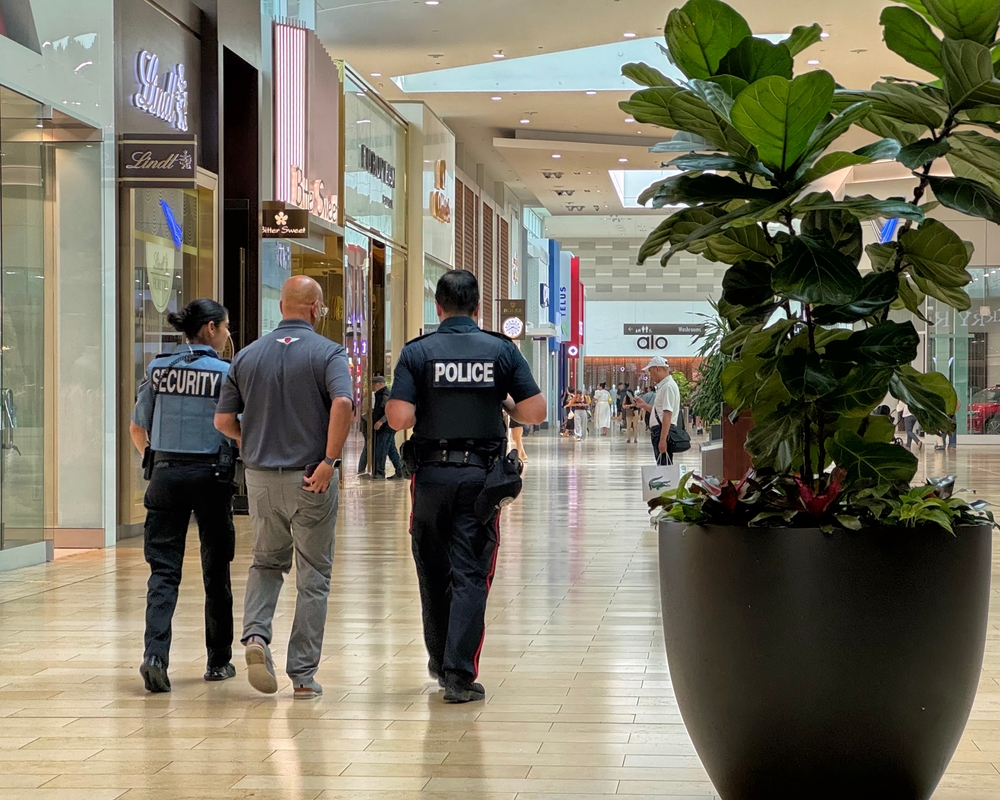
Real estate professionals face a unique and underappreciated danger: they routinely meet strangers, alone, inside empty properties. Open houses, private showings, and vacant property inspections put agents in vulnerable situations every single day.
The National Association of Realtors reports that a significant percentage of agents have experienced a situation where they felt unsafe on the job. In California’s competitive market, agents can’t afford to cancel showings—but they can afford to carry a Byrna SD.
Why Byrna is ideal for real estate professionals:
- Compact and discreet — Fits inside a purse, briefcase, or jacket without alarming clients
- No firearms license required — Byrna launchers are legal to carry in California without a CCW permit
- Effective in close quarters — Kinetic and pepper rounds work at the short distances common in interior spaces
- Peace of mind — Agents can focus on their clients, knowing they have backup if things go wrong
Property managers conducting inspections of occupied or vacant units face similar risks. A less lethal option bridges the gap between being unarmed and carrying a firearm—a gap that many real estate professionals are eager to fill.
👉 Learn more: Real Estate Personnel Safety — How Byrna Keeps Agents Protected
Contact us about institutional training for your real estate team
4. Schools & College Campuses — Safer Response Without Lethal Escalation
School security is one of the most emotionally charged topics in America—and California is no exception. Parents, administrators, and lawmakers all agree on one thing: students and staff deserve to be safe. The disagreement has always been about how.
Arming campus security officers with firearms raises intense debate and significant liability. But leaving them with nothing more than a radio and a flashlight is inadequate in today’s threat environment. Less lethal security offers a powerful middle ground.
Campus security teams equipped with Byrna launchers gain:
- Active threat response — The ability to confront and slow an aggressor without lethal force
- De-escalation capability — Chemical rounds (pepper and tear gas) create distance and time for evacuation
- Reduced legal and political risk — Less lethal deployments carry significantly lower liability than firearm discharges
- Community acceptance — Parents and faculty are more comfortable with less lethal-equipped officers than armed ones
Several California campuses are already exploring or adopting less lethal tools for their security teams. The shift is happening—and the institutions that move early will be best prepared.
👉 See our full analysis: College Campus Safety — Why Less Lethal Makes Sense

5. Healthcare & Mental Health Facilities — Protecting Staff in Sensitive Environments
Healthcare workers face an alarming rate of workplace violence. Emergency rooms, psychiatric units, and outpatient mental health clinics see aggression from patients in crisis on a regular basis. In California, hospital staff assaults have been rising for years.
Firearms have no place in a hospital. But staff deserve more than empty-handed de-escalation when facing a physically violent patient or intruder. Less lethal security provides that critical layer.
How Byrna supports healthcare environments:
- Non-penetrating impact — Kinetic rounds stop aggression without the catastrophic injury risk of bullets
- Chemical deterrent options — Pepper rounds incapacitate without lasting harm, allowing medical intervention afterward
- Appropriate force level — Matches the proportional response most healthcare facilities require
- Training-friendly — Staff can be trained quickly and effectively at facilities like Less Lethal California’s training center in Manteca
Mental health facilities face an especially delicate balance. The goal is always de-escalation—but when a patient becomes violent, staff need a tool that protects everyone in the room without causing permanent injury. Byrna delivers exactly that.
6. Private Security Firms — Meeting the Demand for Non-Lethal-Equipped Guards
The private security industry is booming in California, driven by rising crime and stretched police resources. But here’s the shift: more clients are specifically requesting guards equipped with less lethal tools instead of—or in addition to—firearms.
The reasons are practical:
- Insurance liability — Armed guard contracts carry significantly higher insurance premiums. Less lethal options reduce exposure.
- Client comfort — Retail, hospitality, and residential clients often prefer guards who aren’t carrying guns
- Regulatory simplicity — Less lethal tools have fewer licensing and permitting requirements than firearms in California
- Versatility — Guards equipped with Byrna can respond to a broader range of situations with appropriate force
For private security firms, offering less lethal-equipped teams is a competitive advantage. It opens doors to clients who previously chose not to hire armed security at all.
Professional training is essential. Guards carrying Byrna launchers need the same quality of training as those carrying firearms—scenario-based practice, legal education, and hands-on proficiency. That’s exactly what we provide.
👉 Explore our training: Less Lethal Training Course — Professional Certification
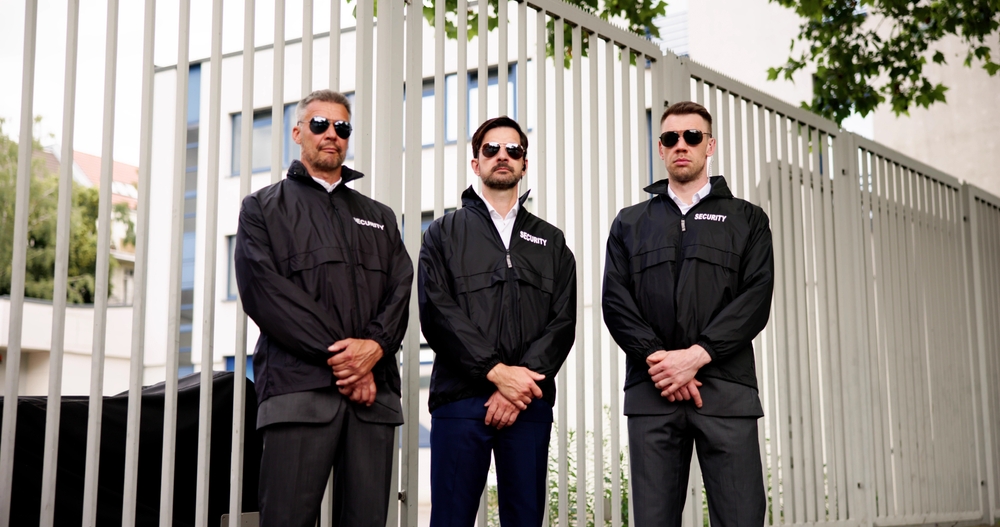
How Less Lethal California Serves These Industries
At Less Lethal California—located in Manteca, CA—we’re California’s first Byrna-dedicated training facility and authorized dealer. We don’t just sell launchers. We build complete less lethal security programs tailored to your industry.
Here’s what we offer for businesses and institutions:
- Group training programs — On-site and at our Manteca facility. Hands-on, scenario-based instruction for teams of any size.
- Institutional consultations — We assess your facility, threat profile, and team to recommend the right less lethal setup.
- Volume pricing — Competitive rates on Byrna launchers and ammunition for organizations outfitting multiple staff members.
- Custom security plans — From use-of-force policy development to deployment protocols, we help you build a plan that’s legally sound and operationally effective.
- Ongoing support — We don’t disappear after the sale. Our team is available for refresher training, equipment maintenance guidance, and policy updates.
Whether you’re a church with a five-person safety team or a security firm outfitting 50 guards, we have the expertise and the inventory to get you mission-ready.
Schedule an institutional consultation — let’s build your less lethal security plan
Frequently Asked Questions
Is less lethal security effective for businesses?
Absolutely. Less lethal tools like the Byrna SD deliver real stopping power through kinetic impact and chemical deterrents. They’re proven effective for personal defense and are increasingly adopted by professional security teams across industries. The key is proper training—which is why we pair every institutional sale with hands-on instruction at our Manteca training facility.
What training do employees need for Byrna launchers?
We recommend our Less Lethal Training Course, which covers safe handling, marksmanship, legal considerations under California law, scenario-based practice, and de-escalation principles. For businesses, we offer group sessions that can be customized to your industry’s specific threat scenarios. No prior firearms experience is required.
How does Byrna compare to tasers for commercial security?
Byrna launchers offer several advantages over tasers in commercial security options. Byrna has greater effective range (up to 60 feet vs. 15 feet for most tasers), the ability to fire multiple rounds without reloading a cartridge, and versatile ammunition options including kinetic, pepper, and tear gas rounds. Tasers also require direct probe contact to be effective—if one probe misses, the device fails. Byrna provides more flexibility and a higher margin for real-world accuracy.
Protect Your Organization with Less Lethal Security
The industries on this list aren’t waiting. From California churches to cannabis dispensaries, from college campuses to private security firms—organizations are making the shift to less lethal security because it works, it’s legally sound, and it keeps everyone safer.
Your organization deserves the same protection.
Less Lethal California is ready to help you build a security program that fits your team, your budget, and your mission. Whether you need a single Byrna SD Kinetic Kit or a full institutional training package, we’ll get you there.
Contact us today about church security training, group rates, and institutional consultations