
California Laws
Byrna Kinetic vs Pepper Rounds: Which Should You Carry?

Your Byrna launcher is only as effective as the ammo you load — and choosing the wrong round for the wrong situation can mean the difference between stopping a threat and escalating one. If you’ve been researching byrna kinetic rounds and wondering how they stack up against pepper or Max projectiles, you’re asking exactly the right question.
In this comprehensive byrna round comparison, we’ll break down every ammo type Byrna offers, do a deep-dive on kinetic and pepper rounds, give you a head-to-head comparison table, and walk through real-world scenarios so you know exactly what to load before you walk out the door. By the end, you’ll have a clear magazine-loading strategy built for California life.
[IMAGE: Byrna kinetic, pepper, and Max rounds side by side on a flat surface — alt text: “Byrna kinetic rounds pepper rounds and Max rounds comparison for self-defense”]
Understanding Byrna Ammo Types
Before we compare specific rounds, let’s get a quick overview of every projectile in the Byrna ecosystem. Knowing your byrna ammo types helps you build the right self-defense loadout from the start.
- Kinetic Rounds — Hard polymer projectiles designed for pain compliance through impact energy alone. No chemical payload.
- Pepper Rounds — OC (oleoresin capsicum) chemical projectiles that burst on impact, releasing an irritant cloud that forces eye closure and respiratory distress.
- Max Rounds — Byrna’s strongest OC formula. Same delivery mechanism as pepper rounds but with a significantly higher concentration of active chemical agent.
- Gel Rounds — OC-based projectiles with a gel consistency that reduces wind drift and cross-contamination, ideal for outdoor carry in breezy California conditions.
Each round has a purpose. None of them is universally “the best.” The smart Byrna owner understands all four and loads accordingly.
Browse the full Byrna ammo lineup in our California store
Byrna Kinetic Rounds — Deep Dive
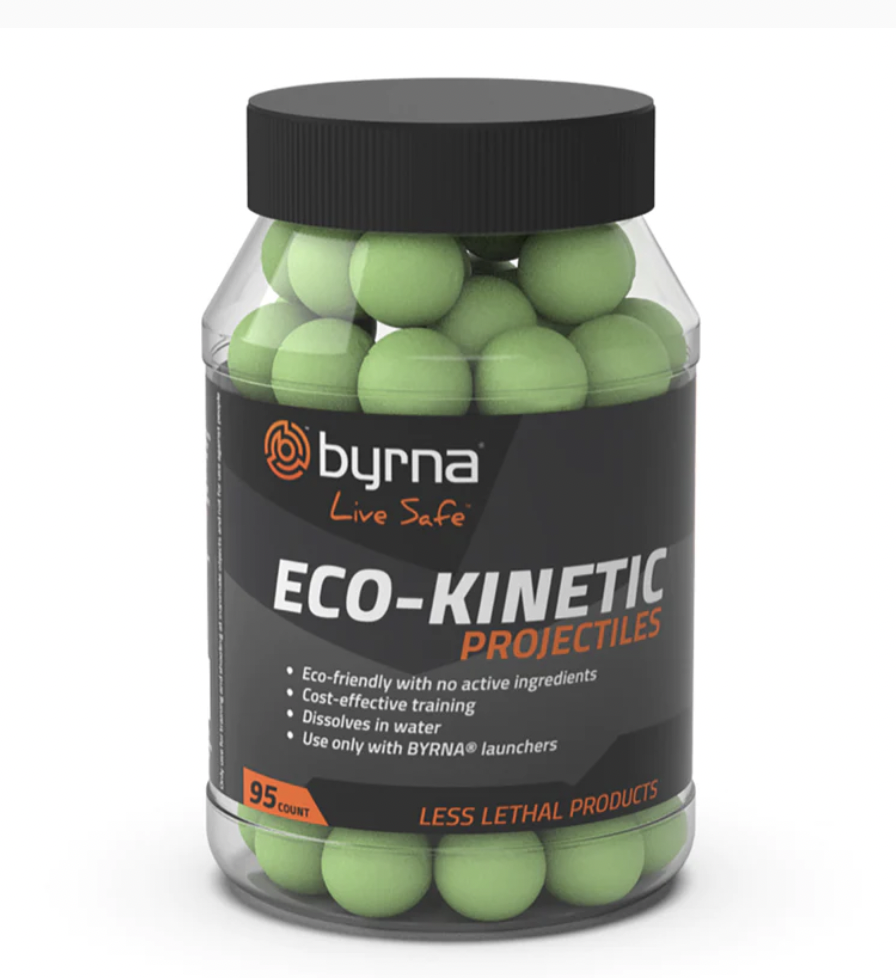
Byrna kinetic rounds are the foundation of the Byrna platform. They’re solid, hard polymer projectiles — no chemical agent, no irritant cloud, just raw impact energy delivered at distance.
How Kinetic Rounds Work
When fired from a Byrna launcher, a kinetic round travels at roughly 300 feet per second, delivering approximately 13 joules of energy on impact. That’s enough force to cause significant pain, bruising, and a strong deterrent effect — similar to getting hit by a high-velocity paintball, but with a much harder and denser projectile.
The effective range sits comfortably at 60 feet, giving you meaningful standoff distance from a threat. At closer ranges, the impact is even more pronounced.
What a Kinetic Round Impact Feels Like
People who’ve been hit by byrna kinetic rounds describe it as a sharp, stinging blow — comparable to a hard rubber-ball impact or a forceful punch concentrated in a small area. It leaves welts and bruises. It absolutely gets someone’s attention.
For a deeper look at the science behind these projectiles and real-world impact data, check out our full breakdown: How Effective Are Byrna Kinetic Rounds?
Best Uses for Kinetic Rounds
- Practice and training — By far the most economical way to build muscle memory and accuracy at the range.
- Indoor environments — No chemical cloud means no risk of OC contaminating your living space or affecting family members.
- Situations with bystanders nearby — Kinetic rounds affect only the person they hit. Zero cross-contamination risk.
- Areas where chemical agents aren’t ideal — Small rooms, cars, or anywhere ventilation is limited.
Train with kinetic rounds at our Manteca range
Byrna Pepper Rounds — Deep Dive
If kinetic rounds are about impact, byrna pepper rounds are about incapacitation. These are your primary self-defense projectiles, and they change the equation dramatically.
How Pepper Rounds Work
Each pepper round is a thin-walled projectile filled with powdered OC (oleoresin capsicum) — the same active ingredient used in law enforcement pepper spray. On impact, the shell bursts and releases a cloud of irritant that envelops the target’s face and upper body.
The effects are immediate and overwhelming:
- Involuntary eye closure — The target physically cannot keep their eyes open.
- Respiratory distress — Coughing, choking, difficulty breathing.
- Disorientation and panic — Loss of coordination and focus.
These effects typically last 30 to 45 minutes, giving you more than enough time to escape, call 911, and get to safety. The target recovers fully — this is a less-lethal tool, not a permanent solution — but for that critical window, they are effectively unable to continue an attack.
Best Uses for Pepper Rounds
- Primary self-defense carry — This is your go-to round when personal safety is on the line.
- Multiple attacker situations — The OC cloud can affect more than one person in close proximity, helping even the odds.
- Creating distance — Even a near-miss releases enough irritant to discourage pursuit.
- Outdoor confrontations — Parking lots, sidewalks, trails — anywhere you need immediate stopping power.
[IMAGE: Byrna pepper round bursting on impact with visible OC cloud — alt text: “Byrna pepper rounds releasing OC cloud on impact for self-defense”]
Byrna Max Rounds — The Maximum Formula
For those who want the absolute highest level of chemical stopping power, Byrna Max rounds are the top tier.
What Makes Max Different
Max rounds use Byrna’s strongest OC concentration — a proprietary formula designed to incapacitate faster and with more intensity than standard pepper rounds. The delivery mechanism is identical, but the chemical payload hits harder.
When to Choose Max Over Standard Pepper
- You want the greatest possible chance of immediate incapacitation.
- You’re concerned about threats who may be under the influence of substances that dull pain response.
- You prioritize maximum stopping power and aren’t worried about indoor OC contamination (you’re carrying for outdoor or away-from-home scenarios).
Max rounds cost slightly more per projectile, but many experienced Byrna owners consider them the best investment for their primary carry magazine.
Head-to-Head Comparison Table
Here’s the full byrna kinetic vs pepper breakdown across every category that matters:
| Category | Kinetic | Pepper | Max |
| Mechanism | Hard polymer impact | OC burst on impact | High-concentration OC burst |
| Pain Level | High (impact) | Moderate impact + severe chemical | Moderate impact + extreme chemical |
| Incapacitation | Low — pain compliance only | High — involuntary eye closure, respiratory distress | Very High — fastest incapacitation |
| Indoor Safety | Excellent — no chemical residue | Poor — OC cloud fills enclosed spaces | Poor — stronger OC cloud indoors |
| Wind Sensitivity | None | Moderate — OC cloud can drift | Moderate — OC cloud can drift |
| Bystander Risk | None — affects only target | Moderate — nearby people may be affected by OC | Moderate-High — stronger cloud |
| Best Scenario | Training, indoor defense, bystander proximity | Outdoor self-defense, primary carry | Maximum threat situations |
| Cost Per Round | $ | $$ | $$$ |
Key Takeaway: Kinetic rounds are the safest, most versatile option for practice and indoor scenarios. Pepper and Max rounds are your primary self-defense ammunition when stopping a threat is the priority.
Compare Byrna launchers to find the right platform for your ammo
Situational Guide: Which Round for Which Scenario
Knowing the specs is one thing. Knowing what to load in a real-world California scenario is another. Here’s your situational playbook:
Home Defense at Night
Best choice: Kinetic rounds (or a kinetic-first mix) In an enclosed hallway or bedroom, an OC cloud can incapacitate you and your family just as much as the intruder. Byrna kinetic rounds deliver stopping pain without contaminating your air. If you want chemical backup, load pepper rounds behind your first two kinetic shots.
For more on protecting your home with less-lethal tools, read our full home defense guide.
Outdoor Confrontation (Parking Lot, Street)
Best choice: Pepper or Max rounds Open air disperses the OC cloud quickly, and you need maximum stopping power. Load pepper or Max as your first rounds.
Dog Attack on a Walk
Best choice: Pepper rounds OC is extremely effective on dogs, causing immediate retreat without permanent harm. A kinetic round may not deter an aggressive animal quickly enough.
At a Business or Property Showing
Best choice: Kinetic rounds If you work in real estate, property management, or any field that puts you in enclosed spaces with strangers, kinetic rounds let you defend yourself without creating a chemical hazard in a client’s property.
Practice and Training Sessions
Best choice: Kinetic rounds Always. They’re affordable, reusable for drills, and teach you the fundamentals of accuracy and trigger control with your specific Byrna model.
Indoor Public Space With Family Present
Best choice: Kinetic rounds Protecting your kids or elderly family members from OC cross-contamination is critical. Kinetic rounds eliminate that risk entirely.
The Smart Approach: Carry a Mix
Here’s what most experienced Byrna owners eventually learn: you don’t have to choose just one.
The smartest magazine-loading strategy combines round types for maximum versatility. Here’s a proven approach:
- First 2 rounds: Pepper or Max — If you need to fire, you want immediate chemical incapacitation as your opening move.
- Next 2-3 rounds: Kinetic — Follow-up shots for pain compliance if the chemical rounds haven’t fully stopped the threat, or if conditions change (wind shifts OC toward you, bystanders move closer).
- Final rounds: Pepper — A chemical “anchor” at the end of your magazine ensures you can re-escalate chemical response if needed.
This mixed-loading strategy gives you options in a dynamic situation. It’s not theoretical — it’s how trained professionals approach less-lethal deployment.
Learn professional loading strategies in our training course
How Many Rounds Should You Carry?
Magazine capacity varies by Byrna model:
- Byrna SD — Standard magazine holds multiple rounds; compact and concealable.
- Byrna LE — Enhanced capacity for extended engagement scenarios.
- Byrna Mission 4 — Bundle includes extra magazines for serious preparedness.
Regardless of your model, the golden rule applies: “Two is one, one is none.” Always carry at least one spare magazine. If your primary magazine is loaded with pepper rounds, consider a backup magazine loaded with kinetic for versatility.
Check out our list of must-have Byrna accessories to make sure you’re equipped with extra magazines, holsters, and storage solutions.
Compare Byrna SD, LE, Mission 4, TCR, and CL launchers
Practice With Your Carry Ammo
Here’s a mistake too many new Byrna owners make: they buy pepper rounds, load their launcher, and never actually fire it. When a real threat appears, they have zero muscle memory, zero understanding of how the projectile behaves, and zero confidence.
Don’t be that person.
Build a Training Routine
- Regular drills with kinetic rounds — These are your primary training ammunition. Affordable enough to shoot often, and they teach you accuracy, draw speed, and recoil management.
- Familiarization sessions with pepper rounds — At least once, fire pepper rounds in a controlled environment so you understand the burst pattern, the OC cloud radius, and how wind affects dispersion.
- Scenario-based practice — Work through the situations above at the range. Practice magazine changes. Practice mixed-round engagement.
Train at Less Lethal California
Our Manteca shooting range is purpose-built for Byrna launchers. You’ll fire both kinetic and pepper rounds under professional supervision, learn magazine-loading strategies, and build the confidence that only comes from trigger time.
Our less-lethal training course covers ammo selection, situational decision-making, and real-world self-defense scenarios — everything in this article and more, hands-on.
Book a range session and try both ammo types today
Frequently Asked Questions
Which Byrna rounds are best for home defense?
For most California homes, byrna kinetic rounds are the safest primary choice for home defense. In enclosed hallways and bedrooms, OC pepper clouds can incapacitate you and your family as much as the intruder. Kinetic rounds deliver strong pain compliance without chemical contamination. However, a mixed-magazine approach — kinetic first, pepper backup — gives you the most options. Read our full kinetic round effectiveness guide for detailed impact data.
Do pepper rounds work in cold weather?
Yes, Byrna pepper rounds function reliably in cold weather conditions. The CO2 propulsion system and the OC chemical payload both perform across a wide temperature range. However, extreme cold can slightly reduce CO2 pressure, which may decrease velocity marginally. For California’s climate — even in the colder Central Valley winters or Sierra foothills — pepper rounds perform as designed. Always store your CO2 cartridges and ammunition at room temperature before loading.
How many rounds does a Byrna magazine hold?
Byrna magazine capacity depends on the specific launcher model. The Byrna SD uses a standard-capacity magazine suitable for everyday carry, while models like the Byrna LE and Byrna Mission 4 Bundle offer options for users who want extended capacity or bundled extras. Regardless of capacity, we always recommend carrying at least one spare magazine loaded with a complementary round type.
Make the Right Ammo Decision — Then Practice It
Choosing between byrna kinetic rounds and pepper rounds isn’t an either/or decision — it’s about understanding when each round is the right tool. Kinetic rounds dominate in indoor scenarios, training, and situations with bystanders. Pepper and Max rounds deliver the chemical incapacitation you need for serious outdoor self-defense encounters.
The smartest Byrna owners in California carry a mix, train with both, and walk out the door with confidence because they’ve put rounds downrange and know exactly how their ammunition performs.
Ready to stop guessing and start training? Visit Less Lethal California’s shooting range in Manteca to fire both kinetic and pepper rounds under professional guidance. Or browse our Byrna SD Kinetic Kit and full ammo selection to build your ideal loadout today.
Byrna Training Near Me: What to Expect at Less Lethal California
If you’ve been searching for Byrna training near me in California, your search is over. Less Lethal California is the state’s first — and only — dedicated Byrna training facility and authorized dealer, located right here in Manteca, CA.
Whether you just purchased your first Byrna launcher or you’ve been carrying one for months without ever putting rounds downrange, proper training is the difference between owning a self-defense tool and actually being prepared to use it. In this guide, we’ll walk you through everything we offer, what your first visit looks like step by step, and why investing in professional less lethal training is one of the smartest decisions you can make for your personal safety.
About Less Lethal California
Less Lethal California was founded on a simple belief: every Californian deserves access to effective, responsible self-defense — without the barriers that come with traditional firearms.
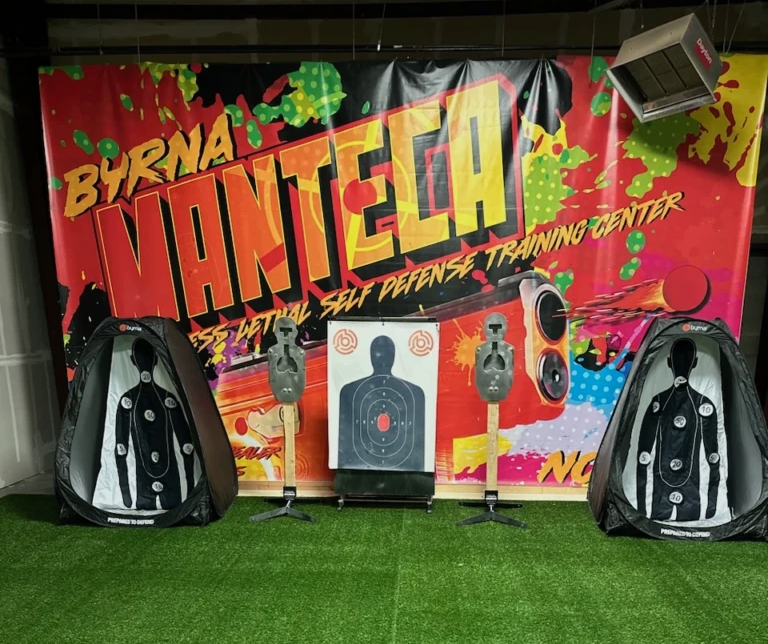
We are California’s first dedicated Byrna training center and authorized dealer. Our facility in Manteca, CA was purpose-built for less lethal training, giving students a professional, safe environment to learn and practice with Byrna launchers.
Our team brings years of experience in self-defense instruction, use-of-force education, and community safety planning. We’re not a gun range that happens to stock Byrna products on a shelf. Everything we do — from our training courses to our indoor range sessions — is centered around the less lethal mission.
Want to know more about our story and our team? Visit our About page.
Our Training Programs
We offer a range of Byrna training programs designed to meet you wherever you are in your self-defense journey.
Beginner Courses
Perfect for first-time Byrna owners or anyone brand new to less lethal self-defense. You’ll learn:
- How your Byrna launcher works — loading, firing, clearing jams
- Basic marksmanship fundamentals
- California-specific legal considerations for carrying and deploying
- Safe storage and maintenance
Advanced Tactical Courses
For experienced owners ready to level up. These sessions cover:
- Draw-from-concealment drills
- Shooting while moving
- Low-light and stress-response scenarios
- Multi-threat situational exercises
Group Sessions
Bring your family, your team, or your friends. Group sessions are a great way to build shared confidence and ensure everyone in your household is prepared — not just the person who bought the launcher.
Institutional Training
We work with churches, businesses, security companies, and property management firms to develop custom training programs tailored to their specific needs. More on this below.
Private Instruction
Want one-on-one coaching? We offer private lessons for individuals who want focused, personalized attention from an instructor.
View our training course options and book online
Book your Byrna training session today
What to Expect at Your First Training Session
Walking into a training facility for the first time can feel intimidating — especially if you’ve never fired any kind of launcher before. Here’s exactly what your first Byrna class at Less Lethal California looks like, step by step.
Step 1: Check-In and Welcome
Arrive a few minutes early. Our staff will greet you, get you signed in, and answer any initial questions. If you don’t own a Byrna yet, no problem — we provide launchers for use during training.
Step 2: Safety Briefing
Before anything else, we walk through our range rules and safety protocols. This covers:
- Proper handling and muzzle discipline
- Range commands and what they mean
- Emergency procedures
- Eye and ear protection requirements
Step 3: Classroom Portion
This isn’t just a shooting class. We dedicate time to the knowledge side of self-defense:
- Legal basics — When can you legally deploy a Byrna in California? What constitutes a justified use of force?
- Situational awareness fundamentals — How to recognize threats early and avoid confrontations when possible. Learn more about situational awareness as a self-defense skill.
- Handling and maintenance — Loading, unloading, CO2 cartridge management, and basic troubleshooting.
Step 4: Range Time
This is the hands-on portion — and it’s where students light up. Under the guidance of experienced instructors, you’ll practice:
- Proper grip and stance
- Target acquisition and accuracy drills
- Draw drills (drawing from a holster or bag)
- Scenario-based practice simulating real-world situations
Step 5: Debrief and Recommendations
After range time, your instructor will review your performance, highlight areas of strength, and suggest next steps — whether that’s an advanced course, a regular range practice schedule, or specific drills you can incorporate monthly.
What to Bring and Wear
- Clothing: Closed-toe shoes, comfortable clothing you can move in. Avoid loose scarves or open-collared shirts (CO2 gas and projectile fragments can be irritating on bare skin).
- What we provide: Launchers (if needed), ammo, eye and ear protection, targets.
- What to bring: A positive attitude. That’s it.
Sessions typically run 60 to 90 minutes depending on the course level.
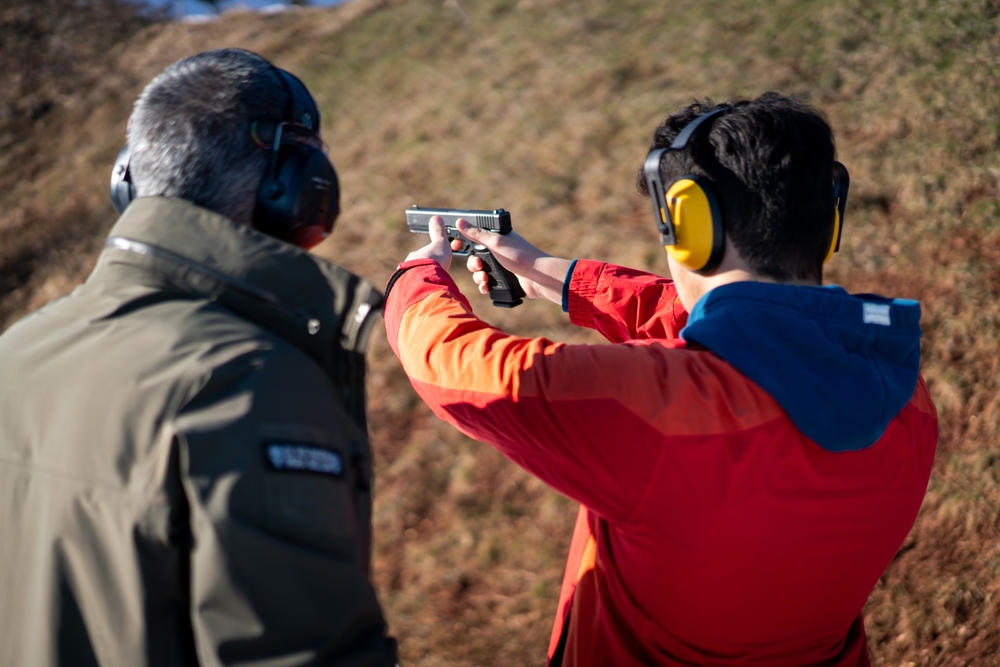
Ready for your first session? Book now
The Indoor Shooting Range
Our facility features a dedicated indoor Byrna shooting range — one of the only spaces in California built specifically for less lethal launcher practice.
Here’s what makes our range stand out:
- Climate-controlled environment — Train comfortably year-round, regardless of Central Valley heat or winter rain.
- Multiple shooting lanes — Enough space for individual practice or group sessions without crowding.
- Supervised by experienced instructors — You’re never on your own. Our range safety officers are there to guide, correct, and encourage.
- Try before you buy — Thinking about upgrading from a Byrna SD to a Byrna LE? Test different launcher models on our range before you commit.
Whether you’re booking a structured class or reserving a lane for independent practice, our shooting range is the safest, most professional environment to sharpen your skills.
Why Training Matters — Even With Simple Tools
One of the most common things we hear is: “It’s just a Byrna — how hard can it be to use?”
The answer might surprise you. Owning a self-defense tool and being prepared to use one under stress are two very different things. Here’s why training matters more than most people think.
Stress Changes Everything
In a real self-defense scenario, your heart rate spikes, your fine motor skills degrade, and your decision-making narrows. A task that feels easy at home on a calm Sunday afternoon becomes remarkably difficult when adrenaline is flooding your system.
Training builds muscle memory — the kind of automatic, practiced response that kicks in when your conscious brain is overwhelmed.
It’s Not Just About Shooting
A quality Byrna training course covers far more than marksmanship:
- Legal use of force — When is it appropriate to deploy? When could it get you in legal trouble?
- De-escalation — Not every threat requires a physical response. Training helps you recognize the difference.
- Aftermath procedures — What to do after a self-defense incident: calling 911, interacting with police, preserving evidence.
The Preparation Gap
Studies in defensive tool use consistently show that untrained individuals are significantly more likely to fumble, freeze, or make poor decisions under pressure. The gap between ownership and readiness is the preparation gap — and training is how you close it.
This is true for firearms, and it’s equally true for less lethal tools. Don’t let the lower lethality give you a false sense of security about your readiness.
Compare the Byrna to traditional firearms
Close the preparation gap — sign up for training
Who Should Get Trained?
The short answer: anyone who owns or plans to carry a Byrna launcher. But here are some groups who benefit the most from professional Byrna training.
- First-time Byrna owners — You’ve invested in a quality self-defense tool. Now invest a couple hours to learn how to use it effectively.
- Experienced owners who haven’t practiced recently — Skills are perishable. If your Byrna has been sitting in a nightstand for six months, you need range time.
- Families — Ensure every adult in your household knows how to safely handle and deploy your Byrna if an emergency arises.
- Security teams — Private security, event staff, and corporate security teams benefit from standardized less lethal training protocols.
- Church safety teams — Houses of worship face unique security challenges. Learn why places of worship need use-of-force policies.
- Real estate agents — Professionals who meet strangers in empty properties face elevated risk. Read about real estate personnel safety.
- College-adjacent residents and staff — Campus safety is an evolving concern in California. Explore our campus safety guide.
- Anyone carrying for everyday self-defense — If it’s in your bag or on your hip, you owe it to yourself and those around you to know how to use it responsibly.

Group Training & Institutional Programs
Less Lethal California offers specialized group and institutional training programs for organizations that want to elevate their safety posture.
Who We Work With
- Churches and places of worship — Safety ministry teams, ushers, and volunteer security
- Businesses — Retail staff, property management teams, corporate offices
- Security companies — Less lethal certification and ongoing training
- Schools and community organizations — Awareness programs and staff preparedness
What’s Included
- Custom curriculum — We tailor the training to your organization’s specific environment, threats, and team experience level.
- Volume pricing — Group rates make professional training accessible for teams of all sizes.
- Team building + safety — Training together builds confidence, cohesion, and a shared safety language within your organization.
We’ll work with you to schedule sessions that fit your team’s availability — weekdays, weekends, or evenings.
Contact us to discuss group training
Inquire about group and institutional training
Location & How to Book
Where to Find Us
Less Lethal California is located in Manteca, CA — in the heart of the Central Valley, easily accessible from Stockton, Tracy, Modesto, Lodi, and the greater San Joaquin County area. We’re also a reasonable drive from the Bay Area for those willing to make the trip for California’s only dedicated Byrna facility.
Get directions and facility details
How to Book
Booking your Byrna training session or range time is easy:
- Online — Visit our training course page or range booking page and select your preferred date and time.
- Phone — Call us directly. Our team is happy to help you choose the right course or answer questions.
- Walk-ins — If lanes and instructor availability allow, we welcome walk-ins. But we always recommend booking ahead to guarantee your spot.
What’s Included in Your Session
- Professional instruction from certified trainers
- Use of Byrna launchers (if you don’t own one)
- Ammunition for the session
- Eye and ear protection
- Range access
- Post-session debrief and recommendations
Book your training session now
Frequently Asked Questions
How much does Byrna training cost?
Pricing depends on the course level and format. Our standard training sessions are competitively priced and include everything you need — instruction, range access, protective gear, and ammunition. Visit our training course page for current pricing and package options. Group and institutional rates are available upon request.
Do I need to own a Byrna to take a training class?
No! We provide Byrna launchers for use during training sessions. This is actually a great way to try different models — like the Byrna SD Kinetic Kit — before you buy. If you do own a Byrna, absolutely bring it. Training with your own launcher is the best way to build familiarity and confidence.
How long is a typical training session?
Most training sessions run between 60 and 90 minutes, depending on the course level. Beginner courses tend to include more classroom instruction, while advanced tactical sessions dedicate more time to range drills and scenario practice. Private lessons can be customized to your preferred duration.
Do you offer group discounts for churches or businesses?
Yes. We offer volume pricing for group training sessions and can create custom training programs for churches, businesses, security companies, and other organizations. Contact us to discuss your group’s needs, and we’ll put together a training plan and quote tailored to your team.
![Less Lethal California Byrna training facility Manteca CA”]](https://lesslethalcalifornia.com/wp-content/uploads/2023/07/Frame-17-1.png "Frame 17 1")
Train With Confidence at California’s First Byrna Facility
If you’ve been searching for Byrna training near me, you’ve found the real deal. Less Lethal California isn’t just another range — we’re the state’s first and only facility built from the ground up around Byrna launchers and less lethal self-defense.
Whether you’re a brand-new Byrna owner, a seasoned carrier looking to stay sharp, or an organization wanting to protect your people — we have a program for you.
Don’t just own a Byrna. Know how to use it.
Book your Byrna training session today at Less Lethal California
Browse Byrna launchers and kits
Are Byrna Launchers Legal in California? Everything You Need to Know
It’s the single most common question we hear at Less Lethal California: is Byrna legal in California? Whether you’ve seen it on social media, heard about it from a friend, or stumbled across one at a trade show, you want a clear answer before spending your money.
Here it is: Yes, Byrna launchers are legal to own, purchase, and carry in California. But like anything related to self-defense in the Golden State, there are important nuances every responsible Californian should understand. In this guide, we’ll break down exactly why Byrna is legal, what you can and can’t do with it, how it compares to firearms under CA law, and what to consider if you ever use one in self-defense.
[IMAGE: Byrna SD launcher displayed on a California state flag background — alt text: Byrna launcher legal in California displayed with CA flag]
The Short Answer: Yes, Byrna Launchers Are Legal in California
Let’s be direct. A Byrna launcher is not classified as a firearm under federal or California state law. That single distinction changes everything about how you buy, own, and carry one.
Here’s what that means in practical terms:
- No FFL (Federal Firearms License) required for purchase or sale
- No background check needed
- No 10-day waiting period
- No registration with the California DOJ
- No REAL ID or special permit needed to buy one
- Shipped directly to your door when purchased online
Because a Byrna is not a firearm, it sidesteps the extensive regulatory framework that governs handguns, rifles, and shotguns in California. You can walk into an authorized dealer like Less Lethal California or order online and have it delivered to your home — no paperwork, no waiting.
Browse our full lineup of Byrna launchers and kits
Why Byrna Is Classified Differently Than Firearms
Understanding why Byrna is legal helps you confidently own and carry one. The classification comes down to how the device operates.
It’s Not Powered by Gunpowder
Firearms are defined — at both the federal (ATF) and California state level — as devices that expel a projectile by the action of an explosive (i.e., gunpowder). Byrna launchers use compressed CO2 cartridges to propel their projectiles. No explosion. No combustion. No firearm classification.
The Projectiles Are Not Ammunition
Byrna fires .68 caliber projectiles — kinetic rounds, pepper rounds, or inert training rounds. Under California Penal Code, these are not classified as ammunition. They’re closer in legal classification to paintball rounds than to bullets. That means there are no ammo purchase restrictions, no background checks for buying refills, and no purchase limits.
ATF Confirmation
The Bureau of Alcohol, Tobacco, Firearms and Explosives (ATF) has confirmed that CO2-powered devices like the Byrna do not fall under their regulatory authority. This isn’t a gray area — it’s a settled classification.
Byrna vs. Firearm: A Comprehensive Comparison
What You CAN Do with a Byrna in California
Knowing that Byrna is legal is one thing. Knowing exactly what you’re allowed to do with it empowers you to use it confidently. Here’s what California law currently permits:
- Own one without any permit or license
- Purchase online and have it shipped directly to your California address
- Carry it openly in most public spaces
- Carry it concealed — since Byrna is not a firearm, California’s concealed carry weapon (CCW) laws for handguns do not apply to it
- Use it for home defense as part of a proportional response to a threat
- Use it for personal self-defense outside the home when facing a credible threat
- Store it without a trigger lock or safe — no California safe-storage firearm laws apply
This is a significant advantage for Californians who want a self-defense option without navigating the state’s complex firearm laws. For more on how concealed carry laws work in California — and why many people are exploring alternatives — read our Concealed Carry Everything Guide.
Ready to take the next step? Shop the Byrna SD Kinetic Kit
What You CANNOT Do (Limitations & Restrictions)
Being legal doesn’t mean there are zero rules. Responsible ownership means understanding the boundaries.
- You cannot use a Byrna to commit a crime. Assault with any weapon — including a less lethal device — is a criminal offense.
- Brandishing laws may apply. Threatening someone with a Byrna without legal justification could result in charges under California brandishing statutes.
- Some restricted areas may still prohibit carry. Courthouses, schools (K-12 campuses), and certain government buildings may restrict all weapons, including non-firearms. Always check posted signage and local rules.
- Local ordinances may add restrictions. While state law permits Byrna ownership, individual cities or counties may have additional rules. Always verify your local regulations.
- Self-defense use must be proportional. California follows a “reasonable force” standard. Using a Byrna when no credible threat exists could expose you to legal liability.
We strongly recommend understanding 5 California self-defense laws every Byrna owner should know before carrying daily.
Byrna vs. Firearms: Legal Requirements Compared
This comparison chart highlights why so many Californians are choosing Byrna — the legal simplicity is dramatic.
| Requirement | Byrna Launcher | California Handgun |
| Background Check | ❌ No | ✅ Yes |
| Waiting Period | ❌ None | ✅ 10 days |
| Registration | ❌ No | ✅ Required with CA DOJ |
| CCW Permit to Carry Concealed | ❌ Not required | ✅ Required (and hard to get) |
| Minimum Age | 18 years old | 21 for handguns |
| Safe Storage Law | ❌ Does not apply | ✅ Required if minors in home |
| Purchase Limit | ❌ None | ✅ 1 handgun per 30 days |
| Restricted Location Carry | Fewer restrictions | Extensive list under SB-2 |
| FFL Dealer Required | ❌ No | ✅ Yes |
California’s SB-2 legislation has made concealed carry permits harder to use even after you get one. For many people, a Byrna offers a practical, legal alternative. Learn more about why Californians are choosing Byrna over traditional firearms.
[IMAGE: Side-by-side comparison graphic of Byrna launcher and handgun with legal requirements — alt text: Byrna vs handgun California legal requirements comparison chart]
Traveling with a Byrna in California
One of the most common follow-up questions: Can I take my Byrna with me when I travel?
In Your Vehicle
Yes. You can transport a Byrna in your car — in the glovebox, center console, door pocket, or on your person. Since it’s not a firearm, California’s strict vehicle-transport laws for handguns (locked container, separate from ammunition) don’t apply.
Crossing County Lines
Byrna is legal statewide under California law. Moving between counties does not change its legal status, though you should still be aware of any unique local ordinances.
Air Travel
You cannot bring a Byrna launcher or its projectiles on an airplane — carry-on or checked baggage — per TSA regulations. This applies to all CO2-powered devices. If you’re traveling by air, you’ll need to leave it at home or ship it separately via ground carrier to your destination.
Interstate Travel
If you’re driving out of California, be aware that laws vary by state. Some states may classify CO2-powered launchers differently. Always research the laws of your destination state before crossing state lines with your Byrna.
Using a Byrna in Self-Defense: Legal Considerations
Owning a Byrna legally is straightforward. Using it in a self-defense situation introduces more complexity. Here’s what you should know.
When Use Is Justified
California law allows the use of reasonable force to defend yourself or others from an imminent threat of bodily harm. A Byrna — especially loaded with kinetic or pepper rounds — is a proportional, less lethal response to many threat scenarios.
When Use Is NOT Justified
- Someone is only using verbal threats with no physical action
- The threat has already ended (the person is retreating)
- You escalate a minor confrontation by drawing your Byrna
- You use it as retaliation, not defense
After an Incident
If you ever use your Byrna in self-defense:
- Call 911 immediately and report the incident
- Do not leave the scene unless your safety requires it
- Document everything — photos, video, witness info
- Do not give detailed statements to police without an attorney present
- Consult a licensed California self-defense attorney as soon as possible
Training matters here. Knowing when and how to deploy your Byrna — not just how to aim — can be the difference between a clean self-defense case and a legal headache. That’s exactly why we built our Less Lethal Training Course.
Enroll in our hands-on training course in Manteca, CA
Minors and Byrna Ownership
Because a Byrna is not a firearm, the rules around minors are different — but they still exist.
- You must be 18 years or older to purchase a Byrna
- Minors under 18 should only use a Byrna under direct adult supervision
- Gifting a Byrna to a minor is a gray area — while not explicitly prohibited like gifting a handgun, we recommend that parents maintain ownership and supervise all use
- Schools and campuses typically prohibit all weapons, including less lethal devices, on school grounds — keep this in mind for college-age buyers as well. Read more about campus safety options.
Where to Buy a Byrna Legally in California
Now that you know Byrna is legal in California — where should you buy one?
Authorized Dealers
Purchasing from an authorized Byrna dealer gives you significant advantages:
- Full manufacturer warranty honored
- Expert guidance on which model and projectile type is right for you
- Access to training — something you won’t get from a random online retailer
- Local support when you have questions
Less Lethal California is California’s first Byrna-dedicated training facility and authorized dealer, located in Manteca, CA. We don’t just sell you a launcher — we train you to use it.
Online Through Byrna.com
You can also purchase directly from the manufacturer at Byrna.com and have it shipped to your door in California. No special forms or transfers required.
Local Retailers
Some sporting goods stores and tactical shops carry Byrna products. Just verify they’re an authorized dealer to ensure your warranty stays intact.
Shop Byrna launchers at Less Lethal California — California’s first dedicated Byrna dealer
Legal Disclaimer
This article is for educational and informational purposes only. It does not constitute legal advice. Laws and regulations can change at the state and local level. We make every effort to keep this content current, but we strongly recommend consulting a licensed California attorney for advice specific to your situation.
[IMAGE: Less Lethal California storefront in Manteca CA — alt text: Less Lethal California authorized Byrna dealer Manteca CA storefront]
Frequently Asked Questions
Do I need a permit to carry a Byrna in California?
No. Because the Byrna is not classified as a firearm, you do not need a concealed carry weapon (CCW) permit or any other permit to carry it in California. You can carry it openly or concealed without special authorization. However, be mindful of location-specific restrictions like courthouses and K-12 schools.
Can I buy a Byrna online and have it shipped to California?
Absolutely. Since no FFL transfer or background check is required, Byrna launchers can be purchased online and shipped directly to your California address — just like any other non-firearm product. You can order from authorized dealers or directly from Byrna.com.
What happens if I use a Byrna in self-defense?
California law permits the use of reasonable force to defend yourself from an imminent threat. Using a Byrna in that context is generally justified. However, you should immediately call 911, document the incident, and consult an attorney before making detailed statements. Proper training helps you make sound decisions under pressure and strengthens any self-defense claim.
Is there a minimum age to own a Byrna in California?
You must be at least 18 years old to purchase a Byrna launcher. Minors should only handle a Byrna under direct adult supervision. While gifting is not explicitly prohibited the way it is with firearms, we recommend parents maintain ownership and control of the device.
Take the Next Step: Get Informed, Get Equipped, Get Trained
Now you know the answer: Byrna is legal in California. But legal knowledge is just the beginning. The most prepared Californians pair their Byrna with proper training and expert guidance.
At Less Lethal California, we help you:
- Choose the right Byrna model for your lifestyle and needs
- Train hands-on at California’s first Byrna-dedicated facility in Manteca
- Understand the legal framework so you carry and deploy with confidence
Don’t just buy a self-defense tool — learn to use it the right way.
Visit Less Lethal California — shop Byrna launchers, book training, and talk to our experts
Related: Byrna vs. Firearm — A Comprehensive Comparison
Related: SB-2 and CCW in California Explained
Related: 5 California Self-Defense Laws Byrna Owners Should Know
SB-2 CCW: California’s Concealed Carry Weapon Law Explained

California has notoriously strict gun control laws, and one area where it is particularly stringent is in its regulations surrounding concealed carry permits. However, in September 2021, California Governor Gavin Newsom signed Senate Bill 2 into law, which aims to streamline the process for obtaining a concealed carry license in the state. This article delves into the details of SB-2 CCW, providing an overview of the law and what it means for California residents.
What is SB-2 CCW?
Senate Bill 2, also known as SB-2 CCW, is a law designed to simplify and standardize the concealed carry weapon (CCW) permit process throughout California. The primary objective of this legislation is to establish a statewide standard for issuing CCW permits, ensuring consistency across all counties within the state.
Before SB-2 CCW, the process for obtaining a CCW permit varied significantly from county to county in California. Each county had its own set of rules, guidelines, and requirements, making the process both complex and unpredictable. SB-2 CCW aims to eliminate these inconsistencies by establishing a standardized set of criteria that counties must adhere to when processing CCW applications.
What does SB-2 CCW change?
Under SB-2 CCW, California counties are now required to issue a CCW permit to an applicant who meets certain basic criteria. These criteria include:
1. Completion of a firearms safety training course: SB-2 CCW mandates that applicants must complete a minimum of eight hours of firearms safety training. This training can be provided by a licensed instructor and should cover topics such as firearm laws, safe handling practices, and marksmanship.
2. Good cause statement: Applicants must provide a “good cause” statement explaining why they need a CCW permit. Previously, the interpretation of “good cause” varied greatly among counties, often resulting in arbitrary denials. SB-2 CCW aims to address this issue by establishing a uniform definition of “good cause.” Examples of acceptable “good cause” reasons include personal protection, self-defense, and employment-related security needs.
3. Background check and fingerprinting: As with any firearm-related application, SB-2 CCW requires a thorough background check and fingerprinting. County sheriffs or police departments are responsible for conducting these checks to ensure that applicants do not have a criminal record or history of domestic violence.
It is important to note that while SB-2 CCW establishes consistent criteria for CCW permits, it does not guarantee approval. Each application will still be assessed on an individual basis, and counties have the discretion to deny a permit if the applicant is found to be unsuitable or poses a danger to public safety. However, the law aims to ensure that denials are based on objective criteria and not subjective interpretations.
Impact of SB-2 CCW
SB-2 CCW represents a significant change in California’s concealed carry landscape. By establishing a statewide standard for CCW permits, the law seeks to create consistency and fairness in the application process. It eliminates the wide variation in requirements and interpretations that previously existed, providing a more predictable and understandable path for applicants.
The law also aims to address the long-standing issue of arbitrary denials. With a standard definition of “good cause” and clearer guidelines for background checks, SB-2 CCW seeks to ensure that denials are based on objective reasons and not personal biases or inconsistent interpretations of the law.
However, it is important to note that SB-2 CCW has its critics. Some argue that the law still maintains restrictive measures that make it difficult for law-abiding citizens to exercise their Second Amendment rights. They argue that requiring “good cause” statements and imposing strict training requirements place an undue burden on individuals who wish to carry.
According to California’s SB-2 laws, you cannot carry a concealed weapon (CCW) in the following places:
1. Schools, including K-12 schools, colleges, and universities.
2. Public buildings, such as courthouses, public libraries, and government facilities.
3. Government buildings that conduct business with the public, including state and federal offices.
4. Private properties where the owner has prohibited the carrying of firearms, either through signage or verbal notice.
5. Airports, except when following proper procedures for declaring and checking firearms.
6. Secure areas within public buildings, like airports and government facilities, where access is restricted by security screening or metal detectors.
7. Federal buildings or properties, including military bases, national parks, and post offices.
8. Polling places during elections.
9. Any location where the carrying of firearms is prohibited by federal law.
10. Any other location specifically prohibited by state law, such as secure areas of hospitals or public transportation vehicles.
11. Churches and other places of Worship.
2025 Update: Where SB-2 Stands Today
If you’ve been following the SB 2 CCW saga, you know it’s been a legal rollercoaster. Here’s where things actually stand for Californians right now—no legal jargon, just the facts you need.
Senate Bill 2 took effect on January 1, 2024, overhauling California’s concealed carry california changes in response to the U.S. Supreme Court’s landmark Bruen decision. Almost immediately, a federal district court blocked most of SB-2’s new “sensitive places” restrictions through a preliminary injunction in May v. Bonta.
Then, on September 6, 2024, the Ninth Circuit Court of Appeals reversed much of that injunction—restoring the majority of SB-2 California’s location-based carry bans. The California Rifle & Pistol Association (CRPA) petitioned for en banc review, but the Ninth Circuit denied that petition in January 2025.
What this means in practice:
- As of early 2025, most of SB-2’s “sensitive places” restrictions are actively enforced
- A handful of locations remain under court injunction and are not yet restricted (more on that below)
- The case is heading back to the trial court for a full decision on the merits—meaning more changes could come
- Legal challenges (May v. Bonta and Carralero v. Bonta) remain ongoing, with a possible path to the U.S. Supreme Court down the road
The bottom line? If you hold a CCW permit in California, you need to pay close attention to where you can and can’t legally carry—because the map just got a lot more complicated.
Confused about what’s legal? Explore our complete California concealed carry guide
[IMAGE: Infographic showing SB-2 timeline from passage through court challenges — alt text: “SB-2 California CCW law timeline showing key court dates and enforcement status”]
SB-2’s Impact on Concealed Carry Permits
The california ccw law 2025 landscape looks dramatically different from just two years ago. SB-2 didn’t just change how you get a ccw permit california—it fundamentally changed where you can carry with one.
The Expanded “Sensitive Places” List
The Ninth Circuit’s ruling means CCW holders are now prohibited from carrying concealed firearms in all of the following locations:
- Bars and restaurants that serve alcohol (including adjacent parking areas)
- Playgrounds and youth centers (including surrounding streets and sidewalks)
- Public parks, athletic areas, and athletic facilities (including adjacent sidewalks)
- State parks and wildlife areas managed by the Department of Parks and Recreation or Fish and Wildlife
- Casinos and gambling establishments
- Stadiums and arenas (including parking areas)
- Public libraries
- Amusement parks
- Zoos and museums
These join the locations that were already off-limits before SB-2:
- School zones and childcare facilities
- Government buildings (state and local)
- Courthouses, jails, and detention facilities
- Colleges and universities
- Airports and passenger terminals
- Police, sheriff, or highway patrol stations
- Polling places
- Nuclear Regulatory Commission properties
Where CCW Holders Can Still Carry (For Now)
Several SB-2 provisions remain under court injunction. As of this writing, CCW holders may still carry at:
- Hospitals and medical facilities
- Public transit (buses, trains, and stations)
- Public gatherings requiring a government-issued permit
- Places of worship (unless the property posts signs allowing or disallowing carry)
- Banks and financial institutions
- Private businesses open to the public (unless a DOJ-compliant sign prohibits firearms)
Important: These exceptions could change at any time as litigation continues. Always verify current restrictions with your county sheriff’s office before carrying.
What This Means for Existing CCW Holders
If you already have a CCW permit, your permit remains valid—but your carry map has shrunk significantly. Think about a typical Saturday: you stop at a park, grab lunch at a restaurant that serves beer, swing by the library, and visit a museum. Under SB-2, your concealed firearm would be prohibited at every single stop.
This is why thousands of Californians are rethinking their self-defense strategy entirely.
California self-defense laws every Byrna owner should know
[IMAGE: Map-style graphic showing restricted vs. permitted carry zones in a typical California city — alt text: “California SB-2 sensitive places map showing where CCW holders can and cannot carry in 2025”]
The Less Lethal Alternative: Why Byrna Ownership Surged Post-SB-2
Here’s the part most people don’t realize: the SB 2 CCW restrictions that apply to firearms do not apply to less lethal launchers like the Byrna.
Since the Byrna is not classified as a firearm under California or federal law, it operates in a completely different legal category. That means:
- No CCW permit required to own or carry a Byrna
- No “sensitive places” restrictions that apply to concealed firearms
- No background check required for purchase
- No waiting period—you can buy and carry the same day
As concealed carry california changes made it harder for lawful gun owners to carry in everyday locations, interest in less lethal alternatives skyrocketed. At Less Lethal California, our training facility in Manteca has seen a dramatic increase in first-time customers—many of them current or former CCW holders looking for a self-defense option they can actually carry everywhere they go.
Why the Shift Makes Sense
The appeal isn’t about replacing firearms. It’s about filling the growing gap that SB-2 created. When your CCW is practically useless at the park, the library, or your favorite restaurant, a Byrna launcher gives you a legal, effective self-defense tool you can carry with confidence.
The Byrna SD Kinetic Kit fires .68 caliber kinetic rounds at up to 300 feet per second—enough force to deter a threat and give you time to escape. And unlike a firearm, deploying it in a public space doesn’t carry the same legal and criminal liability risks.
A note on chemical rounds: While Byrna kinetic projectiles are fully legal in California, pepper and chemical rounds are currently restricted under state law. Byrna Technologies has filed a federal lawsuit challenging this ban, and the case is ongoing. For now, California Byrna owners should use kinetic rounds, which remain fully legal and highly effective.
Ready to explore your options? Shop the Byrna SD Kinetic Kit
7 reasons Californians are choosing Byrna over firearms
CCW vs. Byrna: A Side-by-Side Comparison
Still weighing your options? Here’s how the ccw permit california path compares to Byrna ownership in 2025:
| Factor | CCW + Firearm | Byrna Launcher |
| Permit required? | Yes — CCW permit from county sheriff | No permit required |
| Background check? | Yes — DOJ and FBI | No |
| Cost to get started | $500–$1,000+ (application, training, firearm) | ~$380 (Byrna SD Kinetic Kit) |
| Timeline to carry | 3–6 months (application processing) | Same day |
| Training required? | 8–16 hours (county-mandated) | Not required (but strongly recommended) |
| Restricted “sensitive places”? | Yes — 20+ location categories under SB-2 | No firearm-specific restrictions apply |
| Renewal required? | Yes — every 2 years | No |
| Lethal force liability? | Yes — potential criminal and civil liability | Significantly reduced — designed to be non-lethal |
| Effective range | Varies by firearm | Up to 60 feet (effective deterrent range) |
| Legal in all 50 states? | No — varies by reciprocity | Yes (with some local variations) |
The comparison isn’t about which option is “better”—it’s about which option is more practical for your daily life in California. Many of our customers at Less Lethal California own both a firearm and a Byrna. They use the CCW when and where they legally can, and carry the Byrna everywhere else.
The smartest self-defense strategy isn’t either/or. It’s both.
Get trained on your Byrna at California’s first dedicated less lethal facility
Byrna vs. firearm — a comprehensive comparison
Frequently Asked Questions About SB-2 and Less Lethal Alternatives
Does SB-2 affect Byrna ownership or carry?
No. SB-2’s “sensitive places” restrictions apply specifically to concealed firearms carried under a CCW permit. Because the Byrna is not classified as a firearm, SB-2’s location-based bans do not apply to Byrna launchers. You can legally carry a Byrna in parks, restaurants, libraries, and other locations where concealed firearms are now prohibited. Always carry responsibly and be aware of any local ordinances in your specific city or county.
Can I still get a CCW permit in California in 2025?
Yes, you can still apply. SB-2 actually removed the old “good cause” requirement, making it technically easier to qualify for a CCW. However, the application process remains lengthy (3–6 months in most counties), requires 8–16 hours of mandatory training, and comes with the new “sensitive places” carry restrictions. Contact your county sheriff’s office for current processing timelines and requirements. For a complete walkthrough, read our concealed carry guide.
What are the new “sensitive places” under SB-2?
As of 2025, the enforced list includes: bars and restaurants serving alcohol, playgrounds, youth centers, public parks, athletic facilities, state parks and wildlife areas, casinos, stadiums, arenas, public libraries, amusement parks, zoos, and museums—plus all locations that were already restricted (schools, government buildings, courthouses, airports, etc.). Some locations remain under court injunction, including hospitals, public transit, places of worship, and banks. This list is subject to change as litigation continues.
Is a Byrna a good alternative to a concealed carry firearm?
For many Californians, absolutely. The Byrna provides a practical, legal self-defense option that doesn’t come with the permit requirements, restricted locations, or lethal force liability of a firearm. Byrna kinetic rounds deliver a powerful impact that can stop a threat and create distance for escape. That said, every self-defense situation is different. We recommend owning a Byrna as part of a layered self-defense strategy—and getting proper training to use it effectively.
What should I do if my CCW application is denied?
First, review the denial letter carefully—California law requires the issuing authority to provide a reason. Common denial reasons include incomplete applications, background check flags, or training deficiencies. You have the right to appeal. In the meantime, a Byrna launcher gives you a legal self-defense option that requires no permit. Visit Less Lethal California in Manteca to try a Byrna on our range and get trained by certified instructors—no application or waiting period needed.
Don’t wait for a permit to protect yourself. Shop Byrna launchers and book training today
[IMAGE: Photo of Byrna SD launcher on a training range — alt text: “Byrna SD kinetic launcher at Less Lethal California training facility in Manteca CA”]